
If you’re looking for the best national parks for hiking, you’re in the right place. The US national park system protects more than 85 million acres of wild land — and the hiking that runs through it ranges from flat, paved interpretive walks to multi-day backcountry routes that will test even experienced trekkers.
Whether you’re planning a first family trip with young kids, training for something bigger, or just want to find trails that will genuinely take your breath away, this guide covers the parks that consistently rank as the best hiking destinations in the country. We’ve also included what to know about each park’s trail system, difficulty levels, and what makes each one worth the visit.
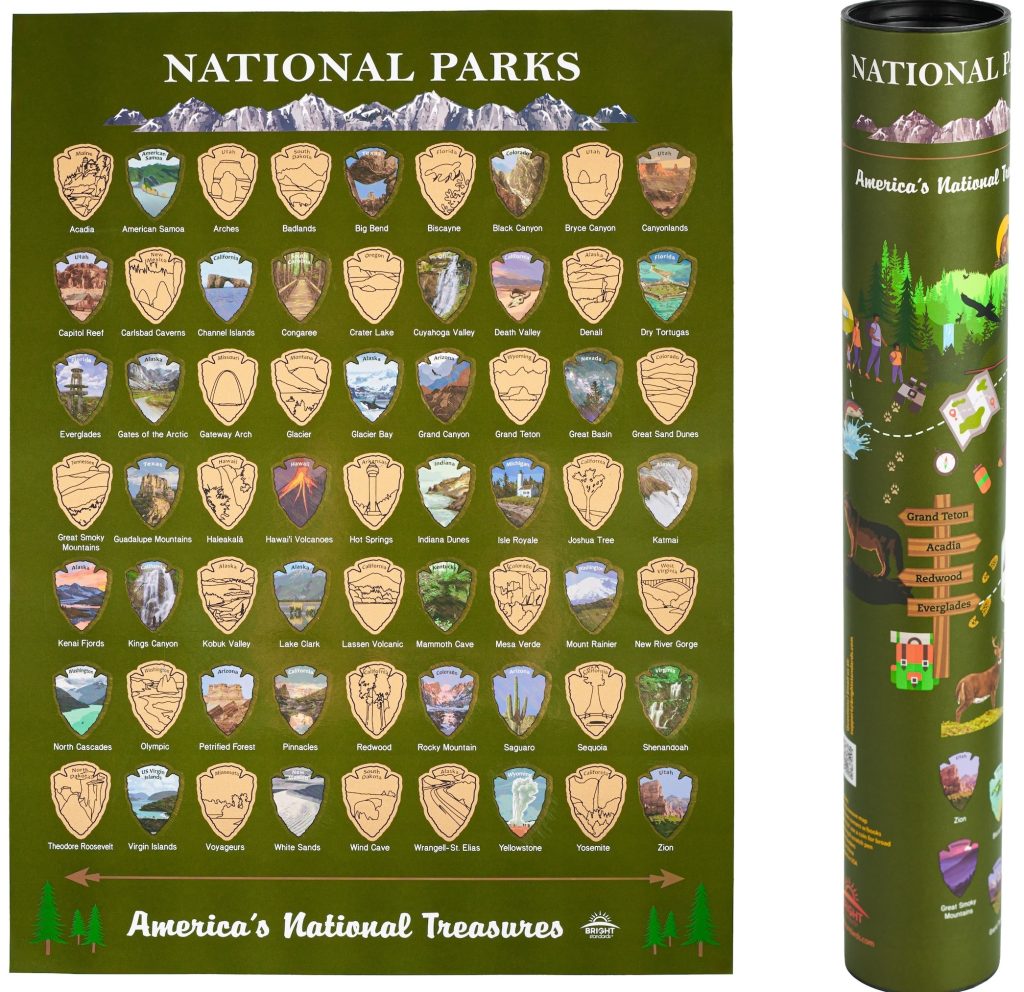
And if you’re tracking your national park visits as you go, our scratch-off national parks map makes it easy to mark off each park you explore — a great motivator to keep adding new ones to the list.
What Makes a National Park Great for Hiking?
Not all national parks are created equal when it comes to trails. The best hiking parks tend to have a few things in common: a wide range of trail difficulty so there’s something for every fitness level, dramatic scenery that rewards the effort, well-maintained and clearly marked routes, and enough trail mileage that you could spend multiple days without repeating yourself.
We’ve weighted those factors in the parks below, along with accessibility for families and the quality of the overall hiking experience.
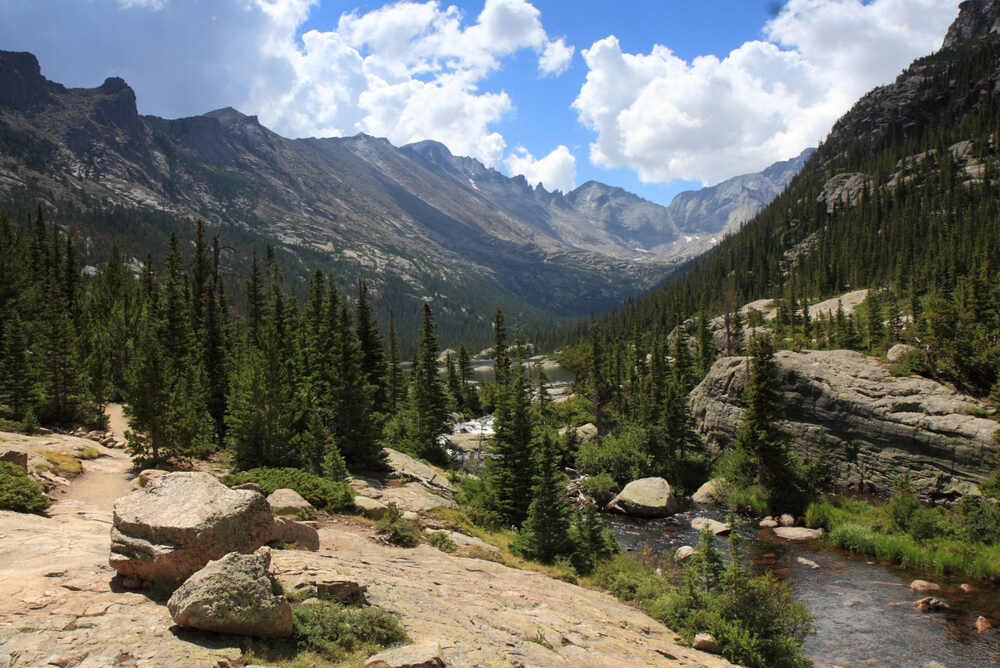
1. Rocky Mountain National Park (Colorado)
With over 350 miles of trails and elevations reaching above 14,000 feet, Rocky Mountain National Park is one of the premier hiking destinations in the entire country. Trail Ridge Road — the highest continuous paved road in the US — puts you at alpine tundra elevation with almost no effort, while the park’s backcountry offers serious challenges for experienced hikers.
The variety is exceptional: wildflower meadows in the valleys, technical scrambles to high summits, and everything in between. Longs Peak (14,259 feet) is the crown jewel for experienced hikers, while Bear Lake and Emerald Lake offer accessible, spectacular scenery for all ages.
Best hikes:
Emerald Lake Trail (3.6 miles RT, easy-moderate): Passes three alpine lakes with stunning mountain backdrops. Perfect for families. Sky Pond (9 miles RT, strenuous): One of the most dramatic hikes in the park, ending at a high alpine lake below a sheer rock face. Flattop Mountain Trail (8.6 miles RT, strenuous): Reaches the Continental Divide with panoramic views in every direction.
Note: A timed entry permit is required May–October. Book well in advance at Recreation.gov.
2. Grand Teton National Park (Wyoming)
The Tetons rise abruptly from the Jackson Hole valley floor in one of the most dramatic mountain vistas in North America — no foothills, just a sudden wall of jagged granite peaks. The hiking here matches the scenery: stunning at every level, from flat lakeside strolls to technical scrambles to genuine mountaineering on the high summits.
Grand Teton has something hikers rarely find together in one place: accessible, beautiful beginner trails right alongside genuine wilderness routes. You can be on a flat path around Jenny Lake in the morning and on a serious ridgeline by afternoon.
Best hikes:
Jenny Lake Loop (7.4 miles, easy): Circumnavigates the most popular lake in the park with constant mountain views — take the shuttle boat one way to save legs for the Cascade Canyon Trail. Cascade Canyon Trail (9.7 miles RT, moderate): One of the best hikes in the park, following a glacier-carved canyon deep into the Tetons. Paintbrush Divide (19 miles, strenuous): A two-day loop through some of the most stunning scenery in Wyoming.
3. Olympic National Park (Washington)
Olympic is one of the most ecologically diverse national parks in the US, encompassing temperate rainforest, rugged Pacific coastline, and alpine wilderness — all within the same park boundary. That diversity means the hiking here is unlike anywhere else in the country.
The Hoh Rain Forest trails feel like something out of Jurassic Park: 12-foot-thick moss draped over ancient Sitka spruce and big-leaf maple trees. The coastal trails offer some of the most dramatic beach hiking on the continent. The high country above Hurricane Ridge delivers mountain panoramas that rival the Alps.
Best hikes:
Hall of Mosses (0.8 miles, easy): The signature rainforest walk — moss-draped maples create a cathedral effect that feels otherworldly. Perfect for all ages. Hurricane Ridge Trails (varies): Multiple trails from 1-5 miles offer sweeping Olympic mountain views with wildflowers in summer. Sol Duc Falls (1.6 miles RT, easy): Leads to one of the most beautiful waterfalls in the Pacific Northwest through old-growth forest.
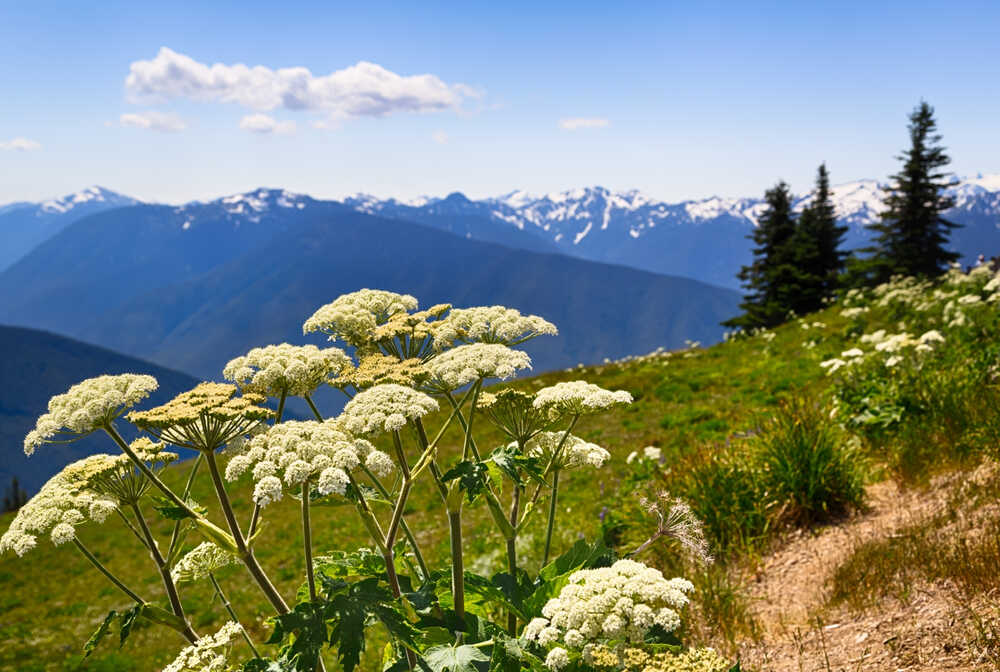
4. Zion National Park (Utah)
Zion is one of the most popular national parks in the country — and for good reason. The trails here are spectacular. Narrow slot canyons, towering sandstone walls, and the famous Virgin River Narrows combine to create a hiking experience that is genuinely unlike anywhere else.
The variety of trail difficulty is exceptional. The Riverside Walk is paved and completely flat. Angels Landing is one of the most thrilling (and vertigo-inducing) hikes in any national park. The Narrows — where you wade through the Virgin River between 2,000-foot canyon walls — is a bucket-list experience for hikers of every level.
Best hikes:
The Narrows (varies, moderate): Wade up the Virgin River through the narrowest section of Zion Canyon — a top-10 hike in the US. Best in summer; requires permit for overnight. Angels Landing (5.4 miles RT, strenuous): Chain-assisted scramble to a narrow fin of rock with dizzying views — permit required. Emerald Pools (3 miles RT, easy-moderate): Three tiered pools accessible via well-maintained trails — great for families.
Note: Zion requires shuttle bus transportation within the canyon — plan for wait times during peak season.
5. Acadia National Park (Maine)
Acadia is the only national park in New England, and its 158 miles of trails make it one of the most trail-dense parks per acre in the system. The hiking here ranges from the famous carriage roads (gravel paths ideal for families and bikes) to the challenging iron rung ladder trails that the Civilian Conservation Corps carved into the granite faces of Acadia’s peaks.
Cadillac Mountain — the highest point on the US Atlantic Coast — can be reached by car or by trail, and from October through March it’s the first place in the US to see the sunrise. The Precipice Trail and the Beehive offer exhilarating iron rung climbs for adventurous hikers.
Best hikes:
Jordan Pond Path (3.3 miles, easy): Flat carriage path around a pristine mountain pond — great for families and the popovers at Jordan Pond House are legendary. The Beehive Loop (1.4 miles, strenuous): Iron rung ladder trail up a cliff face — thrilling for kids old enough to handle it safely. Cadillac Mountain South Ridge (7 miles RT, moderate): The classic summit trail with Atlantic Ocean views on all sides.

6. Great Smoky Mountains National Park (Tennessee/North Carolina)
The most visited national park in the US has over 800 miles of trails — more trail mileage than almost any other park. That volume means even during peak season you can find quieter routes away from the main corridors. The Smokies offer everything from short waterfall walks to the challenging Appalachian Trail, which runs through the heart of the park for 71 miles.
The hiking is lush and green year-round, with spectacular wildflower blooms in spring, cool shaded trails in summer, and brilliant fall foliage that rivals New England. The park’s elevation range — from 875 feet to 6,643 feet at Clingmans Dome — means the scenery changes dramatically as you climb.
Best hikes:
Alum Cave Trail (4.4 miles RT, moderate): Passes stunning geological features including a massive concave bluff — one of the most interesting trails in the park. Laurel Falls (2.6 miles RT, easy): The most popular waterfall trail in the park — paved and accessible for most ages. Appalachian Trail to Charlie’s Bunion (8 miles RT, strenuous): A classic Smokies ridge hike with sweeping views from a dramatic rock outcropping.
7. Glacier National Park (Montana)
Glacier is often called “the Crown of the Continent” — and the hiking lives up to that title. With 700 miles of maintained trails passing through rugged alpine terrain, glacial lakes the color of glacial melt, and wildlife including grizzly bears, mountain goats, and moose, Glacier delivers the complete wilderness hiking experience.
The Going-to-the-Sun Road is legendary for its scenery, and the trails that branch off it access some of the most beautiful terrain in North America. Hikers willing to go further on multi-day backcountry routes find a level of solitude and scenery that is hard to match anywhere in the lower 48.
Best hikes:
Highline Trail (11.6 miles one-way, moderate): The signature Glacier hike — traverses the Garden Wall along the Continental Divide with views that will stop you in your tracks. Hidden Lake Overlook (2.8 miles RT, easy-moderate): Short alpine hike from Logan Pass to a stunning overlook — mountain goats frequently spotted. Grinnell Glacier Trail (11 miles RT, strenuous): Passes three lakes and ends at one of the park’s remaining glaciers — a sobering and spectacular experience.
Note: Vehicle reservation required to drive Going-to-the-Sun Road May–September. Book early at Recreation.gov.
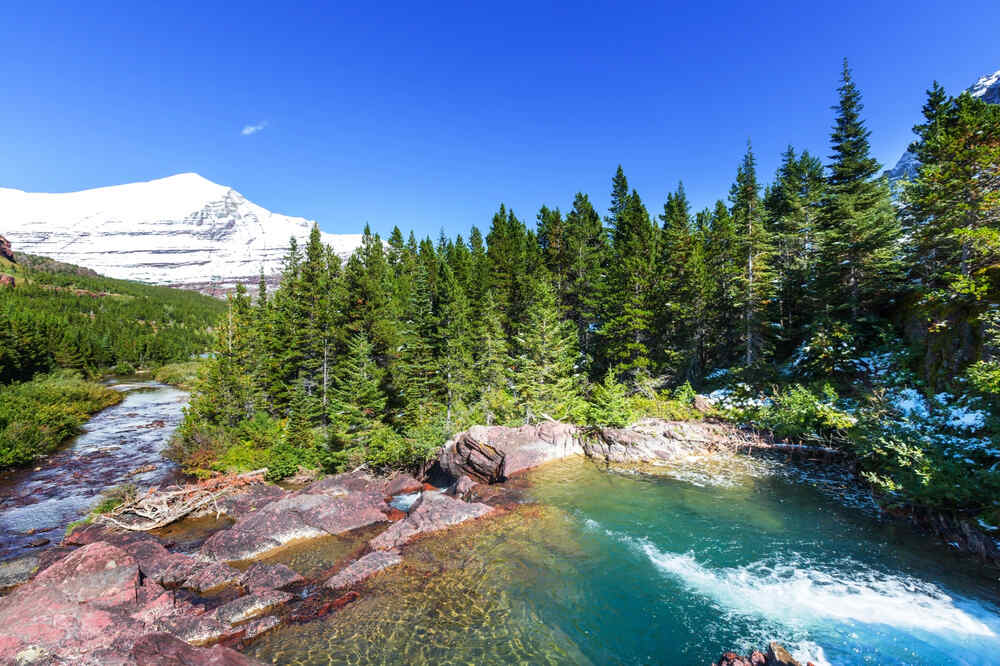
8. Shenandoah National Park (Virginia)
Shenandoah runs for 105 miles along the Blue Ridge Mountains and is among the most accessible national parks for hikers on the East Coast. It’s within a day’s drive of 40% of the US population, yet its 500 miles of trails feel genuinely wild. The Appalachian Trail runs the entire length of the park along the ridge.
Skyline Drive — the park’s main road — provides access to dozens of trailheads, and many of the best hikes combine ridge walking with waterfall visits and valley overlooks. Fall foliage here is spectacular, drawing visitors from across the mid-Atlantic region in October.
Best hikes:
Old Rag Mountain (9 miles RT, strenuous): One of the most popular hikes in the mid-Atlantic — a rock scramble with a technical summit section and great views. Permit required on weekends and holidays. Dark Hollow Falls (1.4 miles RT, moderate): Short hike to one of the park’s most beautiful waterfalls. Hawksbill Summit (2.8 miles RT, moderate): Reaches the highest point in the park with panoramic Shenandoah Valley views.
9. Bryce Canyon National Park (Utah)
Bryce Canyon isn’t technically a canyon — it’s a series of natural amphitheaters filled with thousands of hoodoos (tall, thin spires of rock) in shades of orange, red, white, and gold. Hiking into the amphitheater and among the hoodoos is one of the most surreal hiking experiences in the country.
The park sits at 8,000+ feet elevation, which means cool temperatures even in summer and brilliant stargazing at night. The Rim Trail allows visitors of all abilities to take in the hoodoo formations from above, while the trails that descend into the amphitheater reward the effort with an up-close perspective that photographs cannot capture.
Best hikes:
Queens Garden + Navajo Loop (2.9 miles, moderate): The classic Bryce combination trail — descends into the amphitheater among the hoodoos and returns via Wall Street, a narrow canyon with 200-foot walls. Fairyland Loop (8 miles, strenuous): The park’s best all-day hike with fewer crowds than the main amphitheater trails. Rim Trail (varies, easy): Flat or gently rolling trail along the rim — great for families wanting hoodoo views without a steep descent.
10. North Cascades National Park (Washington)
North Cascades is one of the least visited parks in the lower 48, and its hiking reflects that: raw, wild, and genuinely remote. The park has more glaciers than any other park in the contiguous US, and the scenery — jagged peaks, turquoise glacial lakes, and old-growth forest — is breathtaking at every turn.
The lack of crowds is a feature, not a bug. Trails here feel like genuine wilderness even on summer weekends. The Cascade Pass trail is considered one of the finest day hikes in the Pacific Northwest.
Best hikes:
Cascade Pass Trail (7.4 miles RT, moderate-strenuous): Switchbacks through wildflower meadows to a high mountain pass with glacier views — one of the best hikes in Washington state. Thunder Knob (3.8 miles RT, moderate): Short hike with panoramic lake and mountain views — accessible for most fitness levels. Chain Lakes Loop (6.4 miles, moderate): Passes a series of alpine lakes below the park’s signature peaks.

Tips for Hiking in National Parks with Kids
Hiking with children requires a different mindset than solo or adult-only trips — but it’s enormously rewarding when it works. Here’s what makes the difference between a great family hike and a miserable one.
Pick trails that match your slowest hiker
A 4-mile hike with a 6-year-old takes twice as long as with adults — minimum. Build in time for every rock, bug, and interesting stick along the way. A 2-mile trail that everyone enjoys beats a 6-mile suffer-fest every time.
Start early to beat heat and crowds
The best national park hikes fill up by 9am on summer weekends. Starting at 7am gives you empty trailheads, cooler temperatures, better wildlife activity, and the satisfaction of passing the crowd heading down while you’re already on your way up.
Have a destination that isn’t the summit
Kids need goals. “We’re going to a waterfall” or “we’re going to see the hoodoos” is more motivating than “we’re hiking 5 miles.” Build in a payoff — a lake, a viewpoint, a good rock for lunch — and the journey becomes an adventure instead of an ordeal.
Pack more food and water than you think you need
Snacks solve most trail problems. Bring twice what you think you’ll need, keep them accessible, and offer them proactively before the complaints start. Water consumption in dry or high-elevation parks is higher than expected — plan a liter per person per two hours of hiking as a baseline.
Ready to Start Hiking the Parks?
The parks on this list represent the best hiking in the national park system — but the best one for your family depends on where you live, what fitness level you’re working with, and what kind of scenery makes you feel most alive. The good news is you really can’t go wrong with any of them.
Keep track of every park you hike through, and every stamp you collect, and every trail that leaves you breathless. Our scratch-off national parks map is the perfect way to watch your collection grow over the years — one hike at a time.
Want more national park planning resources? Check out our complete US National Parks List and Map to track your progress toward all 63 parks.
US National Parks List & Map
Want a FREE complete list and recap of all our US National Parks as well as downloadable maps and other great resources? Check out our US National Parks List and Map guide!

<
FAQs
Which national park has the best hiking overall?
It depends on what you’re looking for, but Grand Teton, Rocky Mountain, and Zion consistently rank at the top for overall hiking quality — combining dramatic scenery, well-maintained trails, and options for all skill levels. For a more remote wilderness experience, Glacier and North Cascades are hard to beat.
What is the easiest national park to hike in?
Acadia, Great Smoky Mountains, and Shenandoah all have excellent networks of easy, well-maintained trails suitable for beginners and families with young children. Acadia’s carriage roads are particularly family-friendly — flat, gravel-surfaced, and scenic.
Do you need permits to hike in national parks?
Most day hikes don’t require permits beyond the park entrance fee. However, some specific trails and experiences do require advance permits — including Angels Landing at Zion, Old Rag Mountain at Shenandoah (weekends/holidays), and the Longs Peak summit attempt at Rocky Mountain. Backcountry overnight camping almost always requires a permit. Check the specific park’s NPS website before your trip.
What should I wear hiking in national parks?
Wear moisture-wicking layers, sturdy closed-toe shoes or hiking boots with good ankle support, and a hat for sun protection. Avoid cotton — it holds moisture and causes chafing. In desert parks, long sleeves protect against sun and brush. In mountain parks, bring a rain layer even on clear days; afternoon thunderstorms can develop quickly above treeline.
What’s the best time of year to hike in national parks?
The answer varies by park. Rocky Mountain and Glacier are best July–September when high trails are snow-free. Desert parks like Zion and Bryce Canyon are ideal March–May and September–October (summers are extremely hot). East Coast parks like Acadia and Shenandoah offer excellent hiking May–October, with fall foliage as a highlight. Check current conditions on the NPS website before any visit.
