
Seals are marine mammals known for their streamlined bodies, strong swimming abilities, and extraordinary adaptations to life both in and out of the water. These characteristics include their thick blubber for insulation, sensitive whiskers for detecting prey, and the ability to hold their breath for long dives. As you read on, you might wonder how these adaptations help seals survive in some of the planet’s harshest environments. In this article, I’ll explore the unique characteristics of seals and more as we dive into the world of seals.
- Physical Adaptations
- Sensory Abilities
- Breathing and Diving Capabilities
- Behavior and Social Structure
- Species Diversity
- Role in the Ecosystem
- Conservation and Challenges
- Final Thoughts
- National Parks List, Map, and Complete Guide (All 63 Parks + Downloadable List & Map)
- National Parks Scratch Off Map of United States
- FAQ'S
Physical Adaptations

Body Shape and Size
- Seals have streamlined bodies that reduce water resistance, allowing them to swim with speed and agility. Their smooth, torpedo-like shape helps them move efficiently through water, conserving energy during long swims.
- The size of seals varies significantly depending on the species. Some seals, like the harbor seal, are relatively small, while others, such as the elephant seal, can grow to be massive, weighing several tons. This size variation is often linked to their specific habitats and feeding behaviors.
Flippers and Limbs
- Seals’ flippers are specially adapted for powerful swimming. Their front flippers are used primarily for steering and maneuvering, allowing them to make quick turns and agile movements in the water.
- The rear flippers, which are more robust, provide the thrust that propels seals forward. On land, these rear flippers can also be used for awkward but effective movement, particularly in species that spend time on rocky shores.
Blubber and Insulation
- Seals rely on a thick layer of blubber to keep warm in cold ocean waters. This blubber acts as an insulator, trapping heat and preventing the loss of body warmth in freezing environments.
- Blubber also plays a crucial role in buoyancy, helping seals maintain their position in the water without expending too much energy. This allows them to rest or float effortlessly between dives.
Sensory Abilities

Whiskers (Vibrissae)
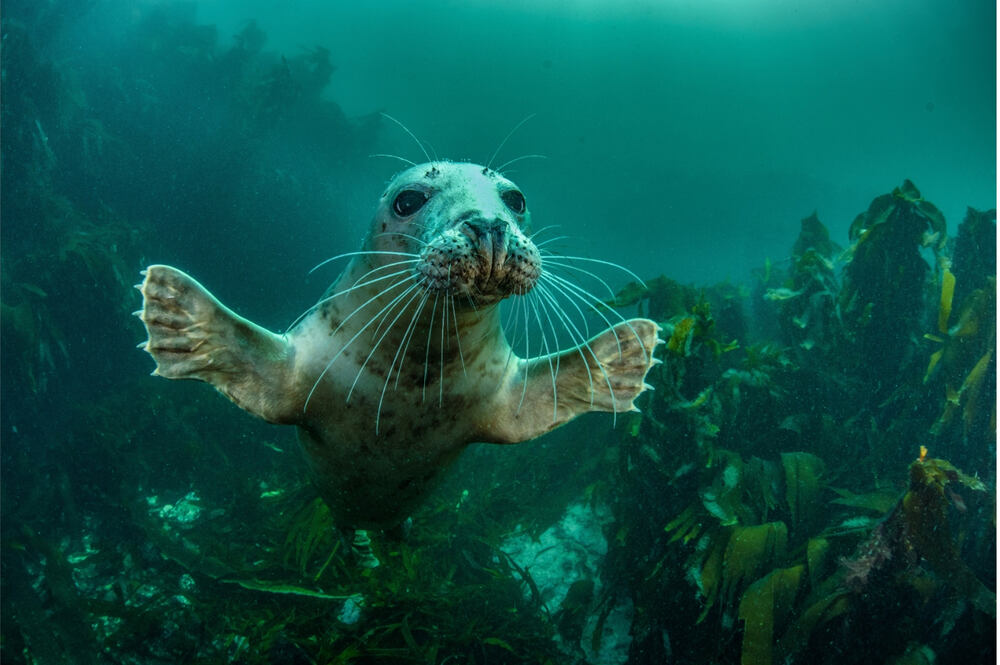
- Seals have highly sensitive whiskers, known as vibrissae, that play an important part in detecting prey. These whiskers can pick up the slightest vibrations in the water, helping seals locate fish and other prey even in dark or murky conditions. This sensitivity allows them to hunt effectively, even when visibility is low.
Hearing and Sight
- Seals possess acute hearing, which is finely tuned for both above and underwater environments. Their ability to hear high-frequency sounds helps them detect predators and communicate with other seals.
- Seals’ vision is also adapted to low-light conditions, allowing them to see well in the dimly lit underwater world. Their eyes are large and specialized for detecting movement, making it easier for them to spot prey or navigate through the water.
Breathing and Diving Capabilities
Breathing Mechanism
- Seals have the remarkable ability to hold their breath for extended periods while diving. They can do this by storing large amounts of oxygen in their muscles and blood. When diving, they can reduce their heart rate significantly, which conserves oxygen and allows them to stay underwater longer.
- During deep dives, seals can redirect blood flow to essential organs like the brain and heart, ensuring these vital areas receive enough oxygen. This ability helps them dive deeper and stay submerged for longer durations compared to many other marine animals.
Diving Depth and Duration
- Seals are known for their impressive diving capabilities, with some species reaching depths of over 1,500 meters (nearly 5,000 feet) and staying underwater for up to two hours. These feats are made possible by their efficient oxygen use and specialized adaptations.
- Compared to other marine mammals, seals are among the top divers. While dolphins and whales also dive deep, seals’ ability to slow their heart rate and conserve oxygen gives them an edge in reaching greater depths and sustaining longer dives.
Behavior and Social Structure
Communication
- Seals use a variety of vocalizations and body language to communicate with each other. They produce sounds such as barks, grunts, and moans, which are used to establish territory, attract mates, or signal distress. Body movements, like flipper slapping or head bobbing, also play a role in communication, helping seals convey messages within their group.
Social Interaction
- Seals are social animals, often found in groups or colonies, especially during breeding seasons. They interact closely with each other, engaging in behaviors such as grooming, playing, and forming social bonds.
- During mating season, males may compete aggressively for access to females, while females exhibit nurturing behaviors, such as nursing and protecting their pups. These social interactions are critical for the survival and continuity of seal populations.
Species Diversity

Different Types of Seals and Their Characteristics
There are several well-known species of seals, each with its unique characteristics.
Harbor seal: One of the most widespread, found along coastlines in both the Northern and Southern Hemispheres. It is known for its adaptability to various environments, from rocky shores to sandy beaches.
Elephant seal: Recognized for its massive size and distinctive trunk-like nose, especially in males. These seals are incredible deep divers and can hold their breath for over an hour.
Leopard seal: Primarily found in Antarctica. It is a top predator, known for its powerful jaws and its diet, which includes penguins and other seals. This species is also distinguished by its long, sleek body and spotted coat, resembling that of a leopard.
Role in the Ecosystem

Predator-Prey Relationships
- Seals play a pivotal role as predators in marine ecosystems. They primarily feed on fish, squid, and crustaceans, helping to regulate the populations of these species and maintain a balanced ecosystem. By hunting various prey, seals contribute to controlling the numbers of these organisms, which can impact the overall health of their marine environments.
- Despite being predators, seals also have natural enemies. Larger marine animals, such as killer whales and sharks, are known to prey on seals. This predator-prey dynamic is essential in maintaining the balance within the marine food web.
Impact on the Marine Environment
- Seals contribute to the health of their marine habitats through their feeding and movement patterns. By preying on specific species, they help maintain the diversity of marine life and prevent any single species from becoming overly dominant.
- Additionally, the movement of seals between different parts of the ocean can help distribute nutrients, supporting various marine organisms and promoting a healthy and diverse ecosystem. Their presence indicates a thriving marine environment, making them key species in the ecosystems they inhabit.
Conservation and Challenges
Threats to Seals
- Seals face significant threats like habitat loss due to coastal development, the impacts of climate change, and continued risks from hunting and fishing practices. Bycatch, where seals are unintentionally caught in fishing gear, is also a major concern.
Conservation Efforts
- Conservation efforts include establishing marine protected areas, enforcing hunting bans, and reducing bycatch. Ongoing research and advocacy are essential to safeguarding seal populations and their habitats.
Final Thoughts
Ultimately, seals are distinctive marine mammals with distinctive physical adaptations, such as streamlined bodies, specialized flippers, and thick blubber for insulation. Their sensory abilities, impressive diving skills, and social behaviors further set them apart. As key predators and indicators of ocean health, preserving seal populations is crucial for maintaining balanced and thriving marine ecosystems.
Protecting seal populations is not only about preserving these incredible animals but also about ensuring the health of the broader marine ecosystems they inhabit. Your awareness and support of conservation efforts are essential in helping to safeguard these vital creatures for future generations.
I WOULD LOVE TO HEAR FROM YOU! Scroll to the bottom to leave a comment about any seals you’ve experienced seeing or any questions you might have about the characteristics of seals.
National Parks List, Map, and Complete Guide (All 63 Parks + Downloadable List & Map)
Want a FREE complete list and recap of all our US National Parks as well as downloadable maps and other great resources? Check out our US National Parks List and Map guide!

National Parks Scratch Off Map of United States
Best Travel Gifts to Track Your Travels and Adventures! Check out the top-selling US National Parks Map Poster of the United States!

FAQ’S
What makes a seal special?
Seals are special due to their unique adaptations, including streamlined bodies for efficient swimming, sensitive whiskers for detecting prey, and the ability to dive deep and hold their breath for extended periods.
What are the characteristics of seals?
Seals are curious, social animals with a playful nature, often engaging in group activities and vocal communication within their colonies.
What do seals love to do?
Seals love to swim, hunt for fish and other marine life, and relax on shores or ice, often engaging in social interactions with other seals.
What are seals’ abilities?
Seals have impressive abilities like deep diving, acute hearing, strong swimming skills, and the ability to navigate and hunt in low-light underwater environments.
Why are seals nice to humans?
Seals are generally non-aggressive towards humans, often displaying curiosity and a calm demeanor, especially when they don’t feel threatened.
Do seals show affection?
Yes, seals can show affection, particularly towards their pups and other members of their social group, often through close physical contact and grooming.
