
Mount Rainier, an iconic peak in Washington State, stands at 14,411 feet and is the highest mountain in the Cascade Range. Established in 1899, Mount Rainier National Park covers over 369 square miles and boasts stunning scenery, diverse wildlife, and a range of outdoor activities. Choosing the right time for your visit ensures you make the most of this majestic destination.
The best months to visit Mount Rainier are July and August, when the weather is warm, trails are fully accessible, and wildflowers are in bloom. However, each season has its unique appeal and outdoor activities.
Curious about what makes each season special at Mount Rainier? Read on as I explain the best times to visit based on criteria such as your preferred activities, wildlife sightings, and more.
- Factors to Consider
- Spring (March to May)
- Summer (June to August)
- Fall (September to November)
- Winter (December to February)
- Best Months Based on Your Interests
- Final Thoughts
- National Parks List, Map, and Complete Guide (All 63 Parks + Downloadable List & Map)
- National Parks Scratch Off Map of United States
- FAQ’S
Factors to Consider
Weather Conditions
- Spring (March to May): Variable, transitioning from winter. Be prepared for a mix of rain and snow.
- Summer (June to August): Warm and clear, ideal for outdoor activities.
- Fall (September to November): Cooler temperatures, with potential early snowfall.
- Winter (December to February): Cold, with heavy snowfall, perfect for winter sports.
Activities Available
- Spring: Limited hiking, early wildflower blooms.
- Summer: Hiking, climbing, and wildflower viewing.
- Fall: Hiking, photography, and enjoying fall foliage.
- Winter: Snowshoeing, skiing, and other winter sports.
Crowds and Tourism
- Spring: Low crowds, offering a more laid-back experience.
- Summer: High tourist season, so expect larger crowds.
- Fall: Moderate to low crowds, providing a more peaceful visit.
- Winter: Low crowds, ideal if you prefer a quieter time.
Wildlife Sightings
- Spring: Animals emerging from hibernation, early bird migrations.
- Summer: High wildlife activity, best time for sightings.
- Fall: Wildlife preparing for winter, migration periods.
- Winter: Limited sightings due to hibernation and harsh weather.
Accessibility
- Spring: Some roads and facilities are still closed.
- Summer: Full access to roads, trails, and facilities.
- Fall: Gradual closure of some facilities.
- Winter: Many areas are inaccessible; always check road conditions before your visit.
Spring (March to May)

Weather: As Mount Rainier transitions from winter, you will encounter a mix of conditions during spring. Be prepared for rain, melting snow, and occasional clear days. Temperatures can vary significantly, so bring layers to stay comfortable.
Activities: Hiking is somewhat limited in the spring due to snow still lingering on higher trails. However, lower-elevation trails start to open up, allowing you to enjoy early wildflower blooms. It’s also a good time for photography and bird watching as nature begins to wake up.
Crowds: Spring is a slower time at Mount Rainier, with fewer visitors compared to the peak summer months. This means you can explore the park without the crowds, giving you a more tranquil experience.
Wildlife: Spring is an excellent time for wildlife sightings. Animals begin to emerge from hibernation, and you might spot black bears, elk, and various bird species returning to the area. Keep a safe distance and use binoculars for a better view.
Accessibility: Some roads and facilities in the park may still be closed due to snow. Before you go, check the park’s website or contact the visitor center for the latest information on road conditions and trail availability.
Summer (June to August)
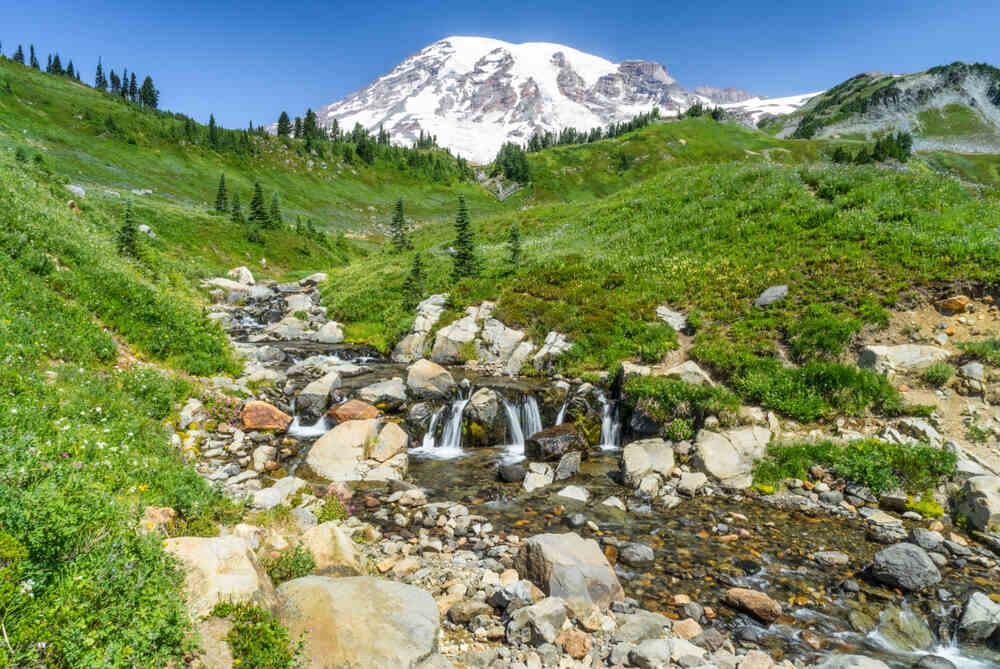
Weather: You’ll find warm and clear conditions, making it the best time to visit in terms of weather. Daytime temperatures are comfortable, and the skies are mostly clear.
Activities: Summer is perfect for hiking, climbing, and wildflower viewing. All the trails are open, and you can explore the park’s vast network of trails, from easy walks to challenging climbs.
Crowds: This is the peak season, so you can expect high crowds. Popular spots and trails will be busy, and accommodations may be harder to find.
Wildlife: Wildlife is highly active during the summer. You have the best chance of spotting animals like deer, marmots, and various bird species. Early morning or late evening are the best times for spotting wildlife.
Accessibility: You’ll have full access to roads, trails, and all park facilities. This makes it easier to explore all areas of Mount Rainier without worrying about closures.
Fall (September to November)

Weather: You’ll experience cooler temperatures, and early snowfall is possible, especially in the higher elevations. Be prepared for changing weather conditions.
Activities: Fall is an excellent time for hiking, photography, and enjoying the vibrant fall foliage. Trails are generally less crowded, and the changing colors allow phenomenal photo opportunities.
Crowds: Expect moderate to low crowds during the fall. The park is less busy compared to summer, making it a more serene time to visit.
Wildlife: Animals are actively preparing for winter, and you may witness migrations. It’s a good time for bird watching and observing wildlife behavior as they gather food and prepare for the colder months.
Accessibility: Be aware that there is a gradual closure of some facilities and roads as winter approaches. Check current conditions and plan your visit accordingly to ensure access to your desired locations.
Winter (December to February)

Weather: Expect cold temperatures and heavy snowfall. Winter conditions dominate, so be prepared for snow and ice.
Activities: Winter is ideal for snowshoeing, skiing, and other winter sports. The park transforms into a winter wonderland, granting unique opportunities for snow-based activities.
Crowds: Expect low crowds during the winter months. Few visitors means you can enjoy the park’s beauty in a quieter setting.
Wildlife: Wildlife sightings are limited due to hibernation and harsh weather. You might see some hardy species, but overall, animal activity is low.
Accessibility: Many areas of the park are inaccessible due to snow. Always check road conditions and closures before you go, and be prepared for limited access to certain trails and facilities.
Best Months Based on Your Interests
For Hiking and Outdoor Activities: You’ll find the best conditions for hiking and outdoor adventures during July and August. The trails are fully open, and the weather is warm and clear.
For Wildflower Viewing: If you want to see the wildflowers in full bloom, plan your visit for late June to July. This is when the meadows are at their most colorful.
For Fall Foliage: To experience the stunning fall colors, visit from late September to October. The foliage is vibrant, and the park is less crowded.
For Winter Sports: For snowshoeing, skiing, and other winter sports, December to February is the best time. The park offers excellent snow conditions for all your winter activities.
Final Thoughts
Choosing the best months to visit Mount Rainier depends on your interests. For hiking and outdoor activities, aim for July to August. If you’re interested in wildflower viewing, late June to July is ideal. For fall foliage, visit in late September to October. If winter sports are your focus, plan your trip for December to February.
Tips for Planning Your Visit:
- Book Accommodations Early: Especially during peak seasons, make reservations well in advance to secure your preferred lodging.
- Check Weather Forecasts: Always check the weather forecasts before your trip to prepare for any unexpected changes.
- Pack Appropriately: Bring clothing and gear suitable for the season you’re visiting. Layers are essential for changing weather conditions.
- Verify Road and Trail Conditions: Look up current road and trail conditions on the park’s website to verify if you’ll have access to the activities you had planned.
National Parks List, Map, and Complete Guide (All 63 Parks + Downloadable List & Map)
Want a FREE complete list and recap of all our US National Parks as well as downloadable maps and other great resources? Check out our US National Parks List and Map guide!

National Parks Scratch Off Map of United States
Best Travel Gifts to Track Your Travels and Adventures! Check out the top-selling National Parks scratch off map of the United States!

FAQ’S
Which side of Mount Rainier is better?
The Paradise area on the south side is often considered the best due to its stunning views, lush meadows, and extensive hiking trails.
What city has the best view of Mt. Rainier?
Seattle offers some of the best views of Mount Rainier, especially on clear days, with the mountain visible from many parts of the city.
Which Mt. Rainier entrance is best?
The Nisqually Entrance, on the southwest side, is the most popular. It provides access to the Paradise area and is open year-round.
Is Mount Rainier worth it?
Yes, Mount Rainier is worth visiting for its breathtaking landscapes, diverse wildlife, and numerous outdoor activities.
Can you enter Mt Rainier at any time?
Mount Rainier National Park is open 24 hours a day. Still, certain roads and facilities may be closed seasonally or due to weather conditions.
