
Starting January 1, 2026, national parks 2026 changes went into effect with new policies affecting entrance fees, ID requirements, annual passes, and fee-free days. These changes introduce new pricing for international visitors while keeping costs the same for U.S. residents, plus adding convenient digital pass options.
Whether you’re a U.S. resident planning your next adventure or an international visitor exploring America’s natural wonders, understanding these new policies will help you prepare for your visit. The updates affect entrance fees at 11 popular parks, annual pass options, ID requirements, and fee-free days throughout the year.
In this guide, I’ll break down exactly what’s changing, which parks are affected, and what you need to know to plan your 2026 national park trips. Let’s look at the details so you’re fully prepared.
- $100 Nonresident Fee at 11 Popular Parks
- ID Requirements for U.S. Residents
- Annual Pass Changes: Pricing and Digital Options
- Fee-Free Days: What's Changed for 2026
- New Pass Design for 2026
- Planning Your Visit: National Parks 2026 Changes Explained
- Final Thoughts
- Track Your National Parks Bucket List
- US National Parks List & Map
- FAQ's
$100 Nonresident Fee at 11 Popular Parks
The most significant change for international visitors is a new $100 per-person fee at 11 of the most visited national parks. This fee applies to non-U.S. residents aged 16 and older and is charged in addition to standard entrance fees.
The 11 parks affected by the nonresident fee are:
– Acadia National Park (Maine)
– Bryce Canyon National Park (Utah)
– Everglades National Park (Florida)
– Glacier National Park (Montana)
– Grand Canyon National Park (Arizona)
– Grand Teton National Park (Wyoming)
– Rocky Mountain National Park (Colorado)
– Sequoia & Kings Canyon National Parks (California)
– Yellowstone National Park (Wyoming, Montana, Idaho)
– Yosemite National Park (California)
– Zion National Park (Utah)
For example, a family of four international visitors entering Yosemite would now pay the standard $35 vehicle fee plus $400 in nonresident fees ($100 per person for four people), totaling $435 for a 7-day pass. The fee applies for the same duration as the park’s standard entrance pass—typically 7 days.
These 11 parks represent the most visited sites in the National Park System and collectively welcome millions of international visitors each year. Revenue from these fees is designated for park infrastructure improvements, facility maintenance, and enhanced visitor services.
For a complete list of all 63 US national parks and their locations, check out our national parks map and guide.

ID Requirements for U.S. Residents
To receive the lower U.S. resident rates, visitors must now show proof of citizenship or residency at park entrances and when purchasing annual passes. This requirement applies to everyone aged 16 and older.
Acceptable forms of identification include:
– U.S. Passport
– State-issued driver’s license or ID card
– Permanent Resident Card (green card)
Park rangers will check IDs at entrance stations to verify residency status. For families traveling together, each person 16 and older needs to show their own ID. This new requirement has led to longer wait times at popular park entrances, especially during peak visiting hours.
When purchasing an annual pass online through Recreation.gov, buyers must enter their ZIP code and may need to upload ID verification. The same ID used for purchase must be presented when entering parks.
For U.S. residents, this is simply a verification step—your entrance fees remain unchanged. The $80 annual pass and standard park entrance fees stay the same as previous years.
Annual Pass Changes: Pricing and Digital Options
The America the Beautiful Annual Pass now has two pricing tiers based on residency status, with a major technology upgrade that makes passes more convenient for everyone.
U.S. Residents: $80 (unchanged from previous years)
Nonresidents: $250 (increased from $80)
The annual pass covers entrance fees and standard amenity fees at more than 2,000 federal recreation sites, including all national parks. For U.S. residents traveling with a vehicle, the pass admits the passholder and all passengers. At parks that charge per-person fees, the pass covers the passholder plus three additional adults (children under 16 are always free).
For international visitors, the math is straightforward: if you’re visiting more than two of the 11 affected parks, the $250 annual pass becomes more cost-effective than paying the $100 fee at each park individually.
The biggest convenience upgrade is the introduction of digital passes. Starting in 2026, all America the Beautiful passes are available as digital downloads through Recreation.gov. You can store your pass on your mobile device, in the Recreation.gov app, or in your mobile wallet for instant access at park entrances.
Physical passes are still available for those who prefer them, though they now include a $7.50 shipping and handling fee. You can also pick up physical passes in person at over 1,000 federal recreation sites nationwide.
Another update: each annual pass now covers two motorcycles instead of one, making national park adventures more accessible for motorcycle riders and their travel companions.
Fee-Free Days: What’s Changed for 2026
The National Park Service has updated its fee-free days schedule for 2026, offering eight fee-free periods when U.S. residents can enter national parks without paying entrance fees. Importantly, these fee-free days now apply only to U.S. residents—international visitors must pay standard entrance fees plus applicable nonresident fees even on these dates.
The 8 fee-free periods for U.S. residents in 2026 are:
- Presidents Day: February 16
- Memorial Day: May 25
- Flag Day/ President Trump’s birthday: June 14
- Independence Day Weekend: July 3-5 (three days)
- National Park Service 110th Birthday: August 25
- Constitution Day: September 17
- Theodore Roosevelt’s Birthday: October 27
- Veterans Day: November 11
Notably absent from the 2026 schedule are Martin Luther King Jr. Day, Juneteenth, and National Public Lands Day, which were included in previous years.
Fee-free days allow U.S. residents to enter national parks without paying entrance fees. However, these days don’t waive fees for camping, tours, transportation, or concession-operated services. During fee-free days, parks typically experience higher visitor volumes, so arriving early or visiting mid-week can help you avoid the biggest crowds.
Remember to bring your government-issued photo ID on fee-free days to verify your U.S. residency and qualify for free admission.
For the most current information on fee-free days, visit the official NPS passes page.

New Pass Design for 2026
The 2026 America the Beautiful passes feature updated artwork commemorating the 250th anniversary of U.S. independence. The new design includes patriotic imagery honoring America’s landscapes, heritage, and founding history.
Whether you choose a digital pass or physical card, your America the Beautiful pass provides the same access and benefits to national parks and federal recreation lands across the country.
The revenue generated from all pass sales goes directly toward maintaining and improving national park facilities, trails, and visitor services—helping address the National Park Service’s significant maintenance backlog.
Planning Your Visit: National Parks 2026 Changes Explained
Understanding these changes helps you plan more effectively, whether you’re a U.S. resident or international visitor. Here’s what you need to know before your next national park adventure.
For U.S. Residents
Your costs haven’t changed—the annual pass remains $80 and individual park entrance fees stay the same. However, you’ll need to carry a government-issued photo ID (driver’s license, passport, or state ID) when visiting parks. This is especially important on fee-free days when rangers verify residency status.
Consider purchasing a digital pass through Recreation.gov for instant access and convenience. You can store it on your phone and avoid waiting for a physical pass to arrive by mail.
Plan visits during fee-free days to save money, but expect larger crowds. Arriving early in the morning or visiting mid-week helps you avoid the busiest times.
For International Visitors
If you’re visiting only one of the 11 affected parks, paying the $100 fee makes sense. But if you’re planning a multi-park trip or traveling with family, the $250 annual pass quickly becomes more economical.
For example, a couple visiting three parks would pay $600 in individual fees ($100 per person at three parks) versus $250 for an annual pass that covers both of them at all parks for the year.
Purchase your annual pass online before your trip through Recreation.gov to save time at park entrances. You’ll need to upload ID verification, but you can complete this process before leaving home.
Budget extra time at park entrances, as ID verification requirements have increased wait times during peak seasons. Consider visiting popular parks early in the morning or during shoulder seasons (spring and fall) when crowds are smaller.
Track your national park adventures and plan your visits with our complete guide to all 63 US national parks and their locations.
Final Thoughts
The 2026 changes to national park access represent the most significant updates to the park system in decades. While the new fees and ID requirements add complexity for some visitors, the introduction of digital passes and expanded motorcycle access brings welcomed conveniences.
For U.S. residents, these changes are relatively minimal—bring your ID and enjoy the same affordable access you’ve always had. The addition of more fee-free days gives families extra opportunities to explore parks without entrance fees.
International visitors face higher costs, but America’s national parks remain among the most spectacular natural destinations in the world. The 11 affected parks represent just a fraction of the more than 400 sites in the National Park System, and many incredible parks don’t charge entrance fees at all.
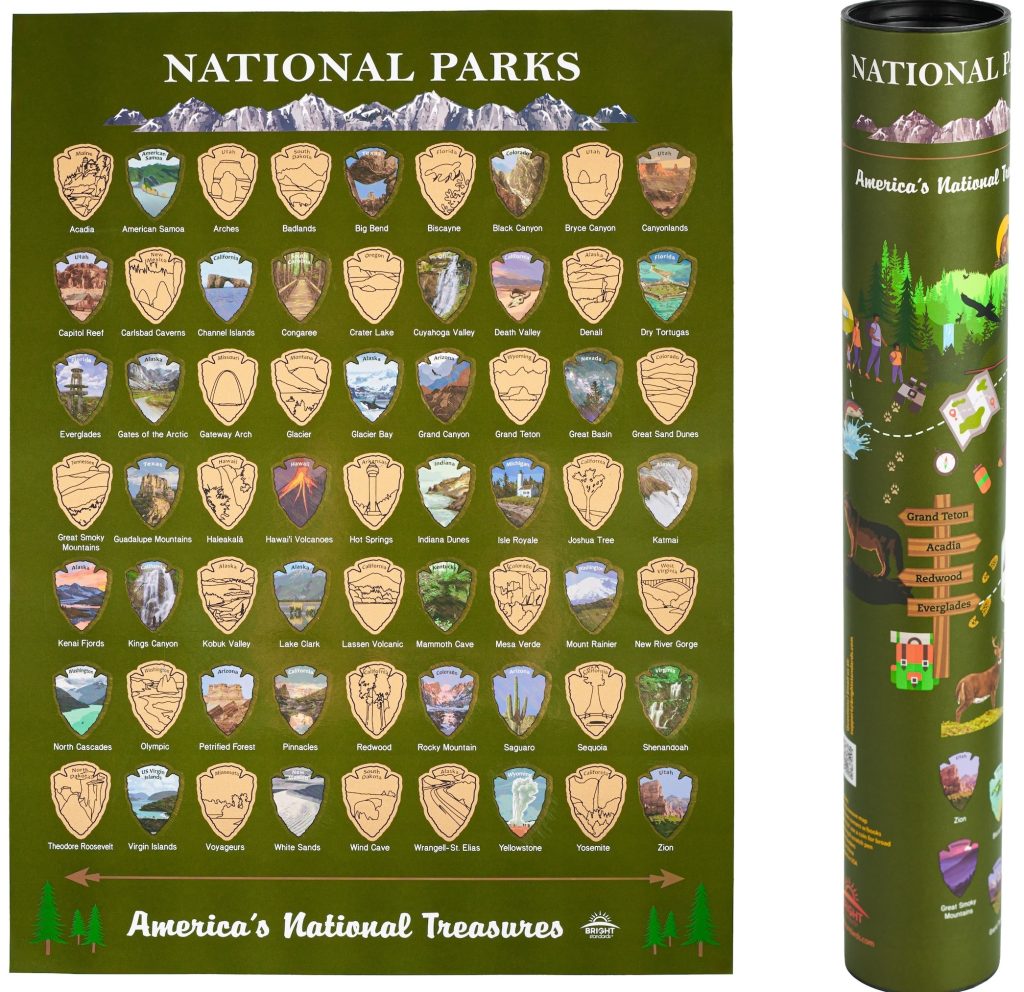
Whether you’re planning to visit one park or working toward seeing all 63 national parks, tracking your adventures makes the journey more memorable. Consider using a national parks scratch-off map to mark each park you visit—it’s a fun way to visualize your progress and inspire your next destination.
Start planning your 2026 national park adventures with the new policies in mind, and don’t let the changes discourage you from experiencing these incredible places. America’s national parks offer unforgettable experiences that are worth every penny and every bit of planning.
Track Your National Parks Bucket List
Track your visits with a beautiful scratch-off map that lets you reveal each park as you check it off your bucket list. Perfect for display in your home and a visual reminder of your progress toward visiting all 63 national parks.
US National Parks List & Map
Want a FREE complete list and recap of all our US National Parks as well as downloadable maps and other great resources? Check out our US National Parks List and Map guide!

FAQ’s
Do I need to show ID to enter national parks in 2026?
Yes, all visitors aged 16 and older must show government-issued photo ID at park entrances. U.S. residents need ID to verify residency status and qualify for lower entrance fees. Acceptable IDs include a U.S. passport, state driver’s license, state ID card, or permanent resident card (green card).
Which national parks charge the $100 nonresident fee?
The $100 per-person fee applies at 11 parks: Acadia, Bryce Canyon, Everglades, Glacier, Grand Canyon, Grand Teton, Rocky Mountain, Sequoia & Kings Canyon, Yellowstone, Yosemite, and Zion. All other national parks maintain standard entrance fees without the additional nonresident charge.
Are children charged the nonresident fee?
No, the $100 nonresident fee only applies to visitors aged 16 and older. Children under 16 enter all national parks for free, regardless of residency status, just as they always have.
Is the $250 annual pass worth it for international visitors?
If you’re visiting three or more of the 11 affected parks, the annual pass saves money. For example, visiting just three parks would cost $300 in nonresident fees alone ($100 x 3), making the $250 annual pass a better value. The pass also covers all other national parks for an entire year.
Can I buy a digital America the Beautiful pass?
Yes, digital passes are now available through Recreation.gov starting in 2026. You can download your pass instantly, store it on your mobile device, and present it at park entrances. Physical passes are still available but include a $7.50 shipping fee.
When are the fee-free days in 2026?
U.S. residents can enter parks for free on eight designated dates: Presidents Day (Feb 16), Memorial Day (May 25), Flag Day/President Trump’s birthday (June 14), Independence Day weekend (July 3-5), National Park Service Birthday (Aug 25), Constitution Day (Sept 17), Theodore Roosevelt’s Birthday (Oct 27), and Veterans Day (Nov 11). These fee-free days do not apply to international visitors.
Do the new fees apply to parks that are normally free to enter?
No, the $100 nonresident fee only applies at the 11 designated parks that already charge entrance fees. Many national parks and National Park Service sites remain free to enter for all visitors regardless of residency status.
