
National parks are one of the best family travel investments you can make. Kids who grow up exploring wild places — spotting their first bison, wading in a glacier-cold river, earning a Junior Ranger badge — carry those memories for life. And with 63 national parks scattered across the country, there’s a perfect park for every family, whether you have a toddler in a carrier or a teenager who thinks every vacation is boring until it isn’t.
The key is knowing which parks are genuinely family-friendly — not just scenic, but logistically manageable with kids. That means accessible trails, kid-magnet wildlife and features, good visitor facilities, and a Junior Ranger program that keeps younger kids engaged. This guide covers the best national parks for families with kids in 2026, plus planning tips that actually work. Start by bookmarking our complete US National Parks List and Map — it’s the easiest way to see all 63 parks and find the ones closest to you.
Pro tip before you go: Every national park offers a free Junior Ranger program for kids. They pick up a booklet at the visitor center, complete activities, and earn an official badge from a park ranger. It’s one of the best ways to keep kids engaged — and it works at every single park on this list.
1. Great Smoky Mountains National Park (Tennessee & North Carolina)
Great Smoky Mountains is the most visited national park in the country, and it earns that title for family travel especially. It’s the only major national park with no entrance fee, making it uniquely accessible. By summer, the mountains are lush and green, waterfalls are flowing, and the park’s famous synchronous fireflies put on a once-a-year light show that’s unlike anything else in the natural world. Wildlife sightings — black bears, white-tailed deer, wild turkeys — are common even on short drives.
Best for families: The paved Laurel Falls Trail is one of the most popular waterfall hikes in the Appalachians and completely manageable for kids of any age. Cades Cove is an 11-mile one-way loop road through an open valley where deer and bears are spotted regularly — it’s essentially a self-guided wildlife safari that kids love. For older kids and teens, Alum Cave Trail to the summit of LeConte is a legitimate adventure.
Don’t miss: The Clingmans Dome observation tower for 360-degree panoramic views, and the Roaring Fork Motor Nature Trail — a narrow, winding road through old-growth forest with several short walks to waterfalls.

2. Yellowstone National Park (Wyoming, Montana & Idaho)
Yellowstone is the ultimate family park for one simple reason: nowhere else on earth can you watch a geyser erupt on schedule, see bison crossing the road in front of your car, and spot a wolf in the same afternoon. The wow factor for kids is immediate and undeniable. Old Faithful erupts roughly every 90 minutes — you can time your visit, watch the eruption, get lunch, and be back at the boardwalk for the next one.
Best for families: The boardwalk trails around the geyser basins are stroller-accessible and flat, making them easy with younger kids. The Grand Prismatic Spring viewpoint gives you the iconic rainbow-colored hot spring shot that looks like it’s from another planet — kids are genuinely awed. Lamar Valley is the best wildlife-watching corridor in the park: bison herds, wolves, bears, and eagles are all possible.
Don’t miss: The Grand Canyon of the Yellowstone and its dramatic Upper and Lower Falls — the Lower Falls drop 308 feet, nearly twice the height of Niagara. Artists Point overlook is one of the most spectacular viewpoints in any national park.
3. Acadia National Park (Maine)
Acadia is one of the most manageable national parks for families. It’s compact enough to navigate easily, the town of Bar Harbor is right at the park entrance and full of family-friendly restaurants and shops, and the park’s 45-mile network of historic carriage roads is perfect for family bike rides — no cars allowed. The coastal scenery is dramatic and immediately rewarding: rocky shoreline, crashing waves, and dense pine forest meeting the sea.
Best for families: Rent bikes in Bar Harbor and ride the carriage roads — it’s one of the best family outdoor experiences in New England. Tide pooling along the rocky shore reveals sea stars, crabs, periwinkles, and anemones that kids will spend hours investigating. Jordan Pond loop (3.4 miles, flat) ends with the famous Jordan Pond House popovers — a tradition since the 1890s.
Don’t miss: Thunder Hole — a narrow inlet where incoming waves compress air and create a thunderous boom you can feel in your chest. Timing matters (visit 1-2 hours before high tide), but kids absolutely love it.
4. Grand Teton National Park (Wyoming)
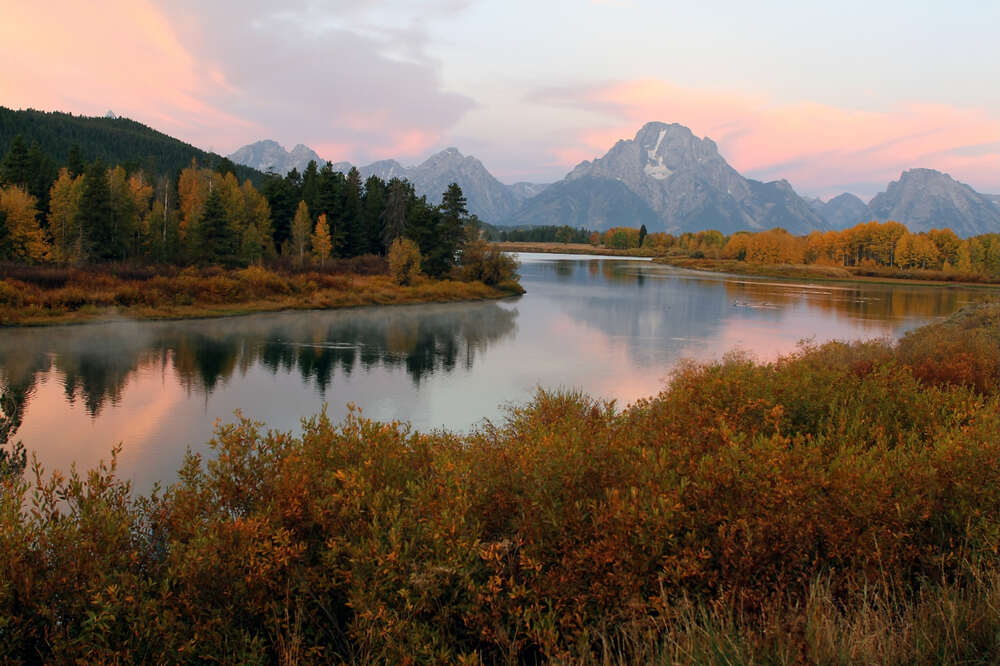
Grand Teton is frequently paired with Yellowstone but deserves its own spotlight for family travel. The Teton Range rising dramatically above Jackson Hole valley is one of the most photographed landscapes in America — every photo your family takes here looks like a professional shot. Wildlife is abundant: moose at Oxbow Bend, osprey nesting at Jenny Lake, pronghorn in the valley, and occasional bear sightings in the northern sections.
Best for families: The String Lake loop (3.7 miles, mostly flat) is one of the best family hikes in the park — clear mountain water, forested shoreline, and Teton views the whole way. Jenny Lake is the park’s centerpiece: a boat shuttle across the lake leads to Hidden Falls and Inspiration Point, a half-day adventure that feels epic without being technically difficult. Oxbow Bend at sunrise is a wildlife-watching spot so reliable it feels almost guaranteed.
Don’t miss: The Snake River Overlook — the location of one of Ansel Adams’ most famous photographs, and just as stunning in person.
5. Olympic National Park (Washington)
Olympic is one of the most underrated family parks in the country. It’s essentially three parks in one — temperate rainforest, rugged Pacific coastline, and alpine meadows — and the variety keeps kids of every age engaged. The Hoh Rain Forest is the most magical place in the park: a landscape of towering Sitka spruce draped in thick green moss that looks genuinely otherworldly.
Best for families: The Hall of Mosses trail in the Hoh Rain Forest (0.8 miles, flat) is one of the most beautiful short walks in any national park, accessible for all ages. Ruby Beach is dramatic Pacific coastline with sea stacks, tide pools, and driftwood-strewn shores — kids could spend an entire day exploring. Hurricane Ridge offers alpine meadows and mountain views with much smaller crowds than comparable parks.
Don’t miss: The Rialto Beach area and Hole-in-the-Wall — a natural sea arch accessible at low tide that feels like a genuine adventure for older kids.
6. Shenandoah National Park (Virginia)
For East Coast families, Shenandoah is one of the most accessible national park options in the country. Skyline Drive stretches 105 miles along the Blue Ridge Mountains with overlooks every few miles — you can do a half-day drive with young kids, pull over at viewpoints, do a short hike, and feel like you’ve had a full park experience. It’s within two to three hours of Washington D.C., Philadelphia, and Baltimore, which means no flights and no elaborate planning.
Best for families: Dark Hollow Falls (1.4 miles round trip) is a beautiful forest walk down to a 70-foot waterfall that’s completely doable for kids 5 and up. Bearfence Mountain (1.2 miles) offers a scrambling route across exposed rock outcrops to panoramic views — older kids and teens love the hands-and-feet climbing section. The Appalachian Trail crosses Skyline Drive at multiple points, making it easy to walk a short, flat section of one of America’s most famous trails.
Don’t miss: Old Rag Mountain is one of the most beloved hikes on the East Coast — a rock scramble circuit with genuine adventure — but suits kids 10 and older who are comfortable on rocky terrain and requires a timed entry permit.
7. Zion National Park (Utah)
Zion is one of the most spectacular places in the American West, and with some planning it’s absolutely doable with kids. The mandatory shuttle system actually makes it easier for families — no driving, no parking stress, just hop on and off at trailheads. The canyon walls rise 2,000 feet above the canyon floor and the scale is awe-inspiring in a way that even jaded teenagers feel immediately.
Best for families: The Pa’rus Trail (3.5 miles, flat, paved) runs along the Virgin River through the canyon and is the only trail open to bicycles and strollers. The Lower Emerald Pools trail (1.2 miles) leads to a grotto with a hanging waterfall that kids love. Canyon Overlook Trail (1 mile) is short and delivers spectacular views for minimal effort. In summer, wading in the Virgin River near Zion Lodge is free and endlessly entertaining for younger kids.
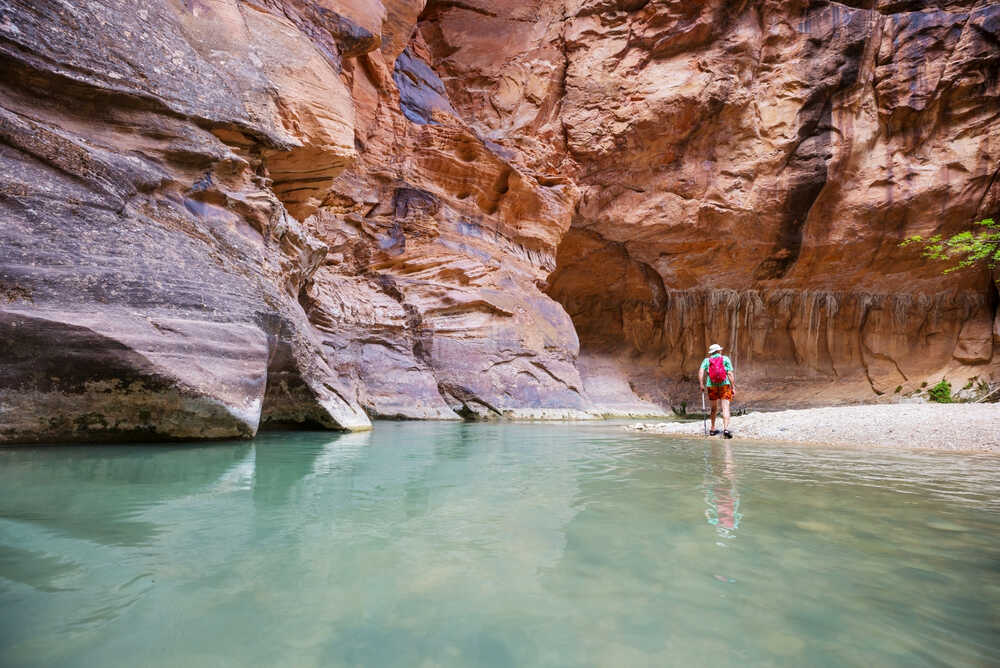
Don’t miss: The Narrows — hiking up the Virgin River through a slot canyon with walls hundreds of feet high is one of the most unique experiences in any national park. In summer the lower section is calm enough for kids 8 and up with water sandals.
8. Rocky Mountain National Park (Colorado)
Rocky Mountain National Park sits just 90 minutes from Denver and offers some of the most accessible alpine scenery in the country. Trail Ridge Road — the highest continuous paved road in the United States at 12,183 feet — is drivable by any vehicle and puts families above treeline with sweeping views of tundra meadows and mountain peaks. Elk are so common near Estes Park that spotting a herd is practically guaranteed.
Best for families: The Bear Lake area has several loop trails radiating from one trailhead, all scenic and manageable. The Sprague Lake loop (0.8 miles, flat, accessible) gives incredible mountain reflections and is perfect for toddlers. Moraine Park is a wide open meadow where elk gather at dawn and dusk — a reliable wildlife-watching stop.
Don’t miss: The Alpine Visitor Center at 11,796 feet on Trail Ridge Road — kids can say they’ve stood higher than most commercial flights cruise, which is a legitimately cool fact.
9. Grand Canyon National Park (Arizona)
The Grand Canyon is one of those places where even the most screen-addicted kid looks up and goes quiet. The scale is simply incomprehensible — 277 miles long, 18 miles wide, over a mile deep — and seeing it for the first time is genuinely unforgettable at any age. The South Rim is the most accessible and family-friendly section, with paved viewpoints, a visitor center, lodges, and shuttle service connecting the major overlooks.
Best for families: The Rim Trail connects the major South Rim viewpoints and is mostly flat and paved — strollers can navigate most of it. Mather Point and Yavapai Point offer the most dramatic views for the least effort. Important note: do not hike down into the canyon with young children in summer — the heat below the rim is extreme and several visitors require rescue every year.
Don’t miss: Sunset from Hopi Point or Mohave Point on the Hermit Road shuttle — the canyon turns red, orange, and purple in the last light, and it’s one of the most spectacular natural shows on the planet.
10. Cape Hatteras National Seashore (North Carolina)
Not every family wants mountains and desert. For families who want a beach experience with the National Park Service stamp of approval, Cape Hatteras National Seashore on North Carolina’s Outer Banks is the answer. The America the Beautiful pass covers admission, the Outer Banks offer warm Atlantic water, wide sandy beaches, and small-town charm that’s a world away from crowded resort beaches further north.
Best for families: The Cape Hatteras Lighthouse — at 198 feet, the tallest brick lighthouse in the United States — is climbable for kids 38 inches and taller and gives a spectacular view. Sea turtle nesting season runs June through August, and ranger programs sometimes include nighttime turtle watches that kids remember forever. The Ocracoke Island ferry is a genuine adventure that makes the trip feel like an expedition.
Don’t miss: The wild ponies of Ocracoke — a herd of feral Banker ponies descended from Spanish shipwreck survivors that has lived on the island for centuries.

Family National Parks Planning Guide
Junior Ranger programs are worth the effort
Every national park offers a free Junior Ranger program. Kids pick up an activity booklet at the visitor center, complete age-appropriate activities, and get sworn in by a park ranger to receive an official badge. It costs nothing, works for ages 4 through 12 (and honestly older), and gives kids a mission for the day. Many families collect badges across multiple parks — there are 63 to collect.
Book early — especially for summer
Lodging inside popular national parks books out 4-6 months in advance for summer weekends. If you want to stay inside the park (Yellowstone lodges, Zion Lodge, Yosemite Valley lodges), reservations open in winter and fill within hours. Even campsite reservations at recreation.gov require months of advance planning for peak-season dates. Start planning earlier than feels necessary.
The America the Beautiful Pass is a must for families
At $80 for an annual pass, the America the Beautiful Pass covers entrance fees at all 63 national parks and hundreds of other federal recreation areas for an entire year. A single family visit to two parks can cost $50-70 in entrance fees. If you’re planning even two national park visits in 2026, the pass pays for itself. Buy it before your first park visit at any park entrance or online.
Early morning changes everything
Parking lots at popular trailheads fill by 8-9 AM at peak parks. Arriving at or before sunrise gives you empty trails, the best light for photos, and cooler temperatures — which matters enormously with young kids. Early risers also get the best wildlife sightings: animals are most active in the first two hours after dawn. Build your schedule around early starts and midday breaks, then a late-afternoon activity when crowds thin.
Final Thoughts
The best national park for your family is the one your kids will talk about for years. That might be Yellowstone’s geysers, the Grand Canyon’s impossible scale, the Smoky Mountains’ free admission and wildlife, or Acadia’s tide pools and bike rides. What all of these parks share is this: they’re places where the real world — the wild, ancient, beautiful version of it — breaks through in a way that no screen can replicate.
Ready to start exploring? Our complete US National Parks List and Map covers all 63 parks with the information you need to plan your family’s next adventure.
Want more national park planning resources? Check out our complete US National Parks List and Map to track your progress toward all 63 parks.
US National Parks List & Map
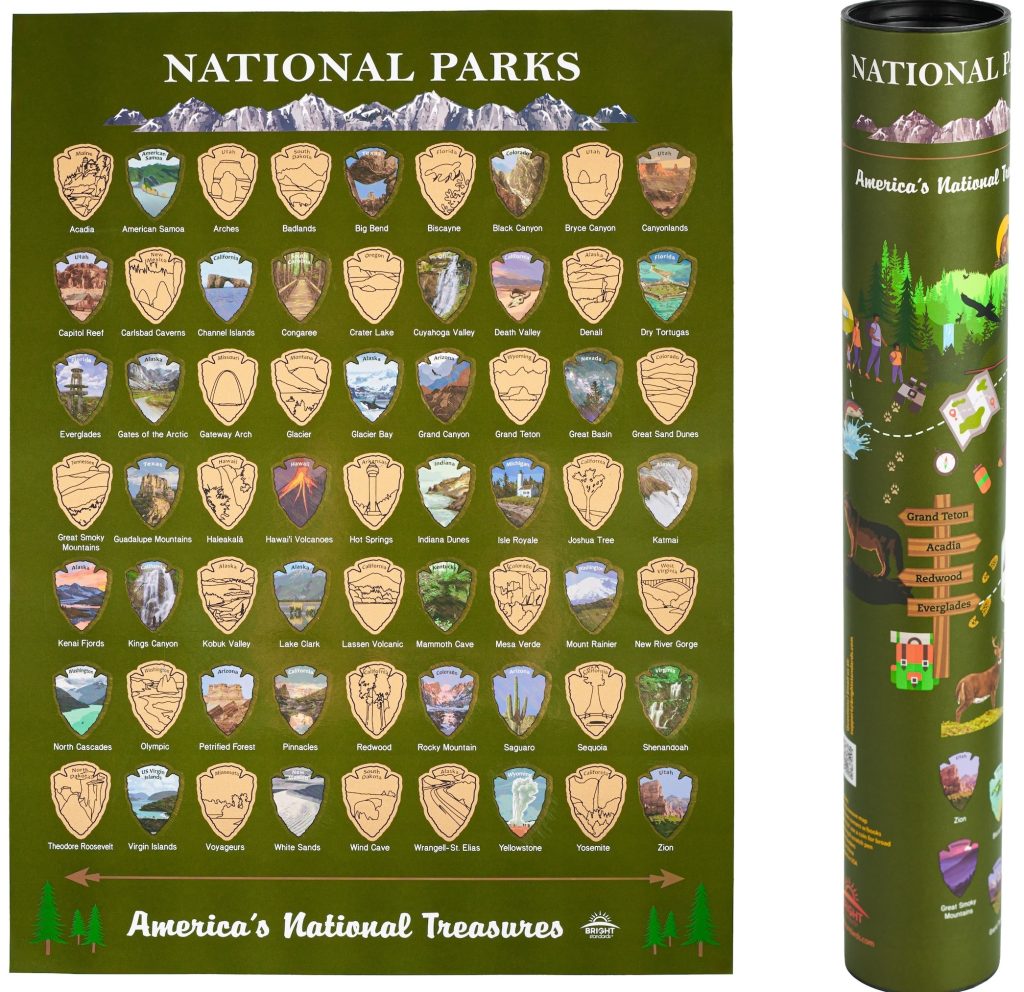
Want a FREE complete list and recap of all our US National Parks as well as downloadable maps and other great resources? Check out our US National Parks List and Map guide!

<
FAQs
Which national parks are best for families with young children?
Great Smoky Mountains, Acadia, and Shenandoah are among the best for families with young children (toddlers through age 8). All three have flat, paved trails accessible for strollers, short distances between attractions, and excellent visitor facilities. Yellowstone is also fantastic for young kids — the geyser boardwalks are flat and stroller-friendly, and the wildlife wow factor works at any age.
What age is best for taking kids to national parks?
There’s no wrong age — it depends on the park and what you plan to do. Babies and toddlers can be carried in packs on most trails. Ages 4-7 are great for shorter hikes, Junior Ranger programs, and wildlife-watching drives. Ages 8-12 can handle most family trails and start to appreciate the history and geology. Teenagers often need a park with a genuine physical challenge — Zion’s Narrows, Old Rag Mountain, or Grand Teton’s Jenny Lake hike tend to win them over.
Do kids get into national parks for free?
Yes — children 15 and under are always admitted free to national parks. The entrance fee applies to adults (typically per vehicle at most parks). Great Smoky Mountains has no entrance fee at all, so the entire family gets in free. The America the Beautiful annual pass ($80) covers a vehicle’s entrance to all national parks for a full year — the best value for families planning multiple visits.
What is the Junior Ranger program?
The Junior Ranger program is a free, self-guided activity program offered at every national park. Kids pick up a booklet at the visitor center, complete a set of age-appropriate activities, and then get sworn in as an official Junior Ranger by a park ranger and receive a badge. Programs are designed for ages 4-12 but many parks have versions for older kids too. It’s one of the best ways to keep kids engaged and learning throughout a park visit — and there are 63 badges to collect.
How do I find family-friendly trails at national parks?
The NPS website (nps.gov) and the free NPS app both have trail listings with difficulty ratings, distance, and accessibility information for every park. The NPS app also works offline, which is useful in areas with limited cell service. At the park, visitor centers stock free paper trail maps and rangers can recommend the best routes for your group’s age range and fitness level. AllTrails is also useful for filtering trails by difficulty and reading recent trip reports from other families.
