
You don’t have to fly west to find world-class national parks. The East Coast and Eastern United States are home to some of the most spectacular, diverse, and underrated parks in the entire National Park System — from the rugged granite coastline of Maine to the subtropical wilderness of South Florida, from underground cave systems stretching for hundreds of miles to a brand-new national park carved out of West Virginia’s river gorges. Whether you’re planning a road trip from the Northeast, a weekend escape from a major city, or a full East Coast national park circuit, this guide covers the best of what’s here.
Eastern parks tend to get overlooked in favor of Yellowstone, the Grand Canyon, and the big Western names — which actually works in your favor. Fewer crowds, easier logistics, and in many cases, just as spectacular scenery. Start by exploring all your options with our complete US National Parks List and Map — it’s the easiest way to see every park and plan your route.
1. Acadia National Park (Maine)
Acadia is the crown jewel of East Coast national parks and one of the most visited parks in the entire country — but it never feels like it. The park sits mostly on Mount Desert Island off the Maine coast, where pink granite mountains tumble directly into the Atlantic Ocean. The combination of rocky coastline, dense boreal forest, and mountain summits accessible by car, bike, or foot makes it endlessly varied. Cadillac Mountain — at 1,530 feet, the highest point on the U.S. Atlantic coast — is famously the first place in the continental United States to see the sunrise from October through March.
Don’t miss: The 45-mile historic carriage road network, built by John D. Rockefeller Jr. and closed to motor vehicles, is one of the best cycling and walking systems in any national park. Thunder Hole, the Beehive Trail scramble, and the Jordan Pond House popovers (a tradition since the 1890s) are all essential Acadia experiences. Peak season is July through August — shoulder season visits in June or September offer the same scenery with dramatically smaller crowds.
2. Shenandoah National Park (Virginia)
Shenandoah stretches 105 miles along the Blue Ridge Mountains of Virginia, less than two hours from Washington D.C. — making it one of the most accessible national parks in the country for the tens of millions of people who live in the Mid-Atlantic corridor. Skyline Drive winds the length of the park with pull-off overlooks every few miles, offering sweeping views of the Shenandoah Valley to the west and the Virginia Piedmont to the east. In fall, the foliage along Skyline Drive is some of the best in the East, drawing visitors from across the region.
Don’t miss: Dark Hollow Falls (1.4 miles round trip) is the park’s most popular waterfall hike — short, beautiful, and doable for most visitors. Old Rag Mountain is one of the most celebrated hikes on the entire East Coast: an 8.8-mile rock scramble circuit with panoramic summit views that requires a timed entry permit on peak weekends. The Appalachian Trail runs the length of the park, making it easy to walk a section of one of America’s most iconic trails.
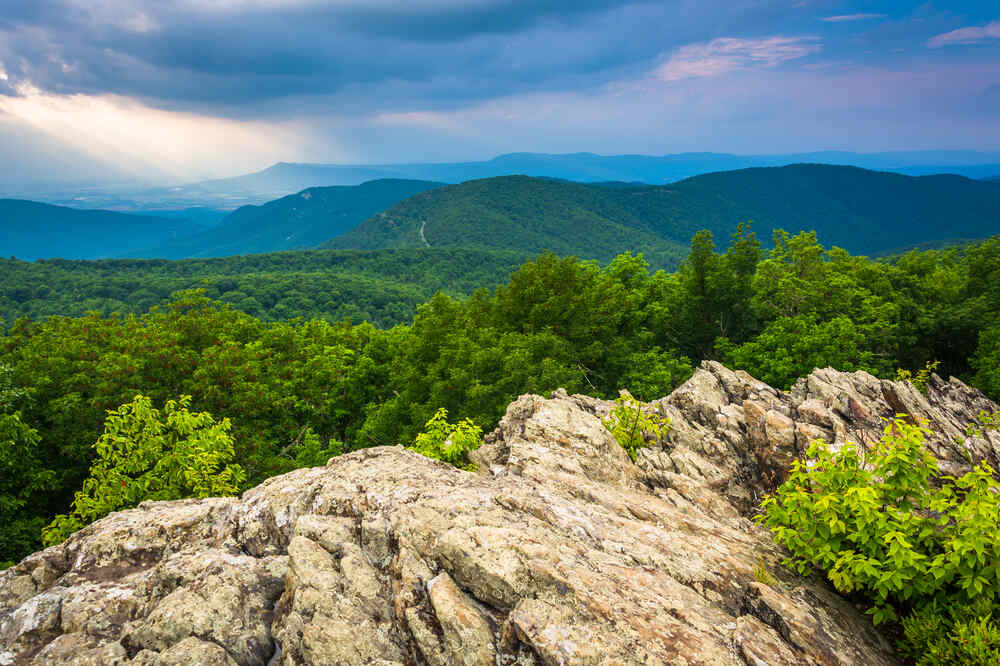
3. Great Smoky Mountains National Park (Tennessee & North Carolina)
Great Smoky Mountains is the most visited national park in America — and the only major one with no entrance fee. The park straddles the Tennessee-North Carolina border along the highest section of the Appalachian Mountains, with ancient rounded summits perpetually wrapped in the blue-gray haze that gives the range its name. The biodiversity here is staggering: more tree species than all of northern Europe, over 1,500 black bears, and the world’s only reliably synchronous firefly display, which draws lottery-selected visitors each June for a once-a-year light show.
Don’t miss: Cades Cove, an 11-mile one-way loop through an open valley, is the best wildlife-watching drive in the park — deer and bears are spotted on nearly every circuit. Clingmans Dome, at 6,643 feet the highest point in the park and in the Appalachians, is reachable by a short but steep paved trail and offers 360-degree views on clear days. The Alum Cave Trail to LeConte is one of the great Appalachian hikes for those who want a genuine summit experience.
4. New River Gorge National Park (West Virginia)
America’s newest national park (designated in 2020) protects one of the oldest rivers on the planet — the New River is thought to be over 300 million years old, predating the Appalachian Mountains themselves. The park centers on a dramatic 70,000-acre gorge carved through the plateau of southern West Virginia, with some of the best whitewater rafting in the eastern United States, world-class rock climbing on the gorge’s sandstone walls, and the iconic New River Gorge Bridge — the longest single-arch steel bridge in the Western Hemisphere — spanning the canyon 876 feet above the river.
Don’t miss: The Long Point Trail (3.2 miles round trip) leads to the best overlook of the New River Gorge Bridge from below — an unforgettable view. Bridge Day, held every third Saturday in October, is one of West Virginia’s biggest events: the bridge is opened to pedestrians and BASE jumpers leap from it into the gorge. The Grandview Rim Trail offers easy walking with dramatic canyon views for those who want the scenery without the strenuous hiking.
5. Mammoth Cave National Park (Kentucky)
Mammoth Cave is the longest known cave system on earth — over 420 miles of mapped passages and counting, with surveyors still adding to the total each year. The cave sits beneath the rolling farmland of central Kentucky, where a unique geology of limestone overlaid by a sandstone cap has created an extraordinary underground world of massive chambers, narrow canyon passages, and formations built over millions of years. Above ground, the park protects 80 square miles of mixed forest along the Green River, with hiking and canoe trails that most visitors never discover.
Don’t miss: Cave tours are the heart of the Mammoth Cave experience and must be reserved in advance at recreation.gov — they fill quickly, especially in summer. The Historic Tour is the classic introduction, walking the cave’s largest passages past formations and the park’s 19th-century saltpeter mining history. The Wild Cave Tour, for those who want a genuine caving adventure, involves crawling and squeezing through unimproved passages — one of the most unique experiences in the national park system.

6. Congaree National Park (South Carolina)
Congaree is one of the most undervisited national parks in the country — and one of the most remarkable. The park protects the largest intact expanse of old-growth bottomland hardwood forest in the United States, a floodplain forest where champion-sized trees tower above a tangle of cypress knees, moss-draped tupelo, and blackwater sloughs. The scale of the trees is humbling: loblolly pines over 150 feet tall, bald cypresses with trunks 25 feet in circumference, trees that were already old when the country was founded. The park receives a fraction of the visitors of comparable parks — you can hike here on a summer weekend and feel almost completely alone.
Don’t miss: The Boardwalk Loop (2.4 miles) winds through the heart of the old-growth forest on an elevated walkway — the easiest introduction to the park and stunning in any season. Kayaking or canoeing the Cedar Creek canoe trail (15 miles, put-in at the park) is the best way to experience Congaree’s blackwater wilderness. From late May through early June, synchronous fireflies similar to those at Great Smoky Mountains put on a spectacular light show — Congaree’s version is less famous and easier to access without a lottery.
7. Everglades National Park (Florida)
The Everglades is unlike any other place in the national park system. It’s not a swamp in the conventional sense but a slow-moving river — 60 miles wide and just inches deep — flowing south from Lake Okeechobee to Florida Bay. The park protects the largest subtropical wilderness in the United States and is a UNESCO World Heritage Site, an International Biosphere Reserve, and a Wetland of International Importance. The wildlife is extraordinary: American alligators and American crocodiles share the same waters (the only place in the world this occurs), manatees winter in the coastal mangroves, and over 360 species of birds have been recorded here.
Don’t miss: Visit in the dry season (December through April) when wildlife concentrates around shrinking water sources and mosquitoes are manageable — summer visits in the wet season are brutally hot and buggy. The Anhinga Trail (0.8 miles, flat, paved) near the main visitor center offers some of the best wildlife viewing of any short trail in any national park: alligators sunning feet away, anhingas drying their wings, herons stalking fish in clear water. Shark Valley’s 15-mile tram road loop (or bike rental) gives access to the park’s interior with near-guaranteed alligator sightings.
8. Biscayne National Park (Florida)
Just 25 miles south of Miami, Biscayne is one of the most unusual national parks in the system: 95% of it is water. The park protects the northernmost Florida Keys, a stretch of Biscayne Bay, and the third-largest coral reef system in the world. Most visitors never experience it because there’s no road access to the park’s islands and reefs — you arrive by boat, kayak, or on a park-operated tour. Those who make the trip find crystal-clear waters, vibrant coral gardens, tropical fish, sea turtles, and the remote, undeveloped Florida Keys that existed before the Overseas Highway changed everything.
Don’t miss: The park’s Dante Fascell Visitor Center on the mainland is the departure point for boat tours, snorkeling trips, and kayak rentals. Elliott Key, the park’s largest island, has a campground, swimming beach, and a hardwood hammock trail through the interior — accessible only by private boat or park ferry. For snorkelers and divers, the reef system off Adams Key and Boca Chita Key is world-class and dramatically less crowded than comparable reef parks in the Florida Keys.

9. Dry Tortugas National Park (Florida)
Dry Tortugas is the most remote national park east of the Mississippi — a cluster of seven small coral islands and surrounding waters 70 miles west of Key West, accessible only by seaplane or a 2.5-hour ferry ride. The centerpiece is Fort Jefferson, a massive 19th-century military fortress on Garden Key that was never completed and served briefly as a Civil War prison. The surrounding waters are some of the clearest in Florida, with snorkeling directly off the fort’s moat wall revealing coral, sea turtles, nurse sharks, and hundreds of tropical fish species. The night sky here, with no light pollution for 70 miles in every direction, is extraordinary.
Don’t miss: The ferry from Key West (Yankee Freedom III) departs early morning and returns in the evening — day trips are excellent but an overnight camping stay on Garden Key turns it into one of the most memorable national park experiences anywhere. From March through April, the Bush Key rookery fills with tens of thousands of nesting frigatebirds and sooty terns in one of the largest seabird colonies in the Atlantic. Book ferry tickets and camping permits months in advance.
10. Cuyahoga Valley National Park (Ohio)
Cuyahoga Valley sits between Cleveland and Akron in northeastern Ohio — and it’s proof that spectacular national parks exist in places most people would never expect. The park follows the winding Cuyahoga River through a deep forested valley, protecting a patchwork of waterfalls, wetlands, meadows, and historic Ohio & Erie Canal infrastructure that shaped the region’s 19th-century economy. It’s one of the most visited national parks in the country simply because of its proximity to a major metropolitan area — over 2 million people visit each year — and it punches well above its weight on natural beauty.
Don’t miss: Brandywine Falls, a 65-foot waterfall accessible via a short boardwalk trail, is the park’s most iconic feature. The Towpath Trail runs 20 miles along the historic canal towpath through the heart of the park — flat, well-maintained, and perfect for walking or cycling. The Cuyahoga Valley Scenic Railroad offers narrated train rides through the valley and operates seasonal excursions that pair well with fall foliage.

Planning Your East Coast National Park Trip
The East Coast has great road trip potential
Unlike the West, where national parks are often hundreds of miles apart across open desert, the Eastern parks cluster within reasonable driving distance of each other and of major cities. Acadia to Shenandoah is a long day’s drive through New England and the Mid-Atlantic. Shenandoah to Great Smoky Mountains follows the Blue Ridge Parkway south — one of the most scenic drives in the country. The Florida parks (Everglades, Biscayne, Dry Tortugas) combine naturally into a single South Florida trip. New River Gorge pairs well with Shenandoah and Mammoth Cave into a mid-Atlantic loop.
Seasonal timing matters more in the East
Eastern parks have more dramatic seasonal variation than most Western parks. Acadia in October rivals anything in New England for fall color. Great Smoky Mountains’ fall foliage (mid-October) draws enormous crowds — the park recommends weekday visits during peak foliage. The Everglades is best visited December through April; summer is brutally hot, humid, and mosquito-ridden. New River Gorge and Shenandoah are beautiful in spring (wildflower season, April-May) and fall but accessible year-round. Mammoth Cave maintains a constant 54°F underground regardless of season.
The America the Beautiful Pass covers them all
Every park on this list — including Dry Tortugas and Biscayne — is covered by the America the Beautiful annual pass ($80). The pass covers entrance fees for the entire vehicle for a full year at all 63 national parks and hundreds of other federal recreation areas. If you’re planning visits to two or more parks, it pays for itself immediately. Note that the Dry Tortugas ferry fee is separate from the entrance fee, but the entrance fee itself is covered.
Final Thoughts
The East Coast national parks are among the most rewarding in the country — and among the most overlooked. While everyone else is flying to Utah or Wyoming, you can be standing alone on a Congaree boardwalk beneath 150-foot trees, kayaking a blackwater Florida reef, or watching fireflies pulse in synchronized silence in a Tennessee cove. The parks are here. They’re spectacular. They’re often less crowded than their Western counterparts. The only thing left is going.
Use our complete US National Parks List and Map to plan your route and find every Eastern park within reach of where you live.
Want more national park planning resources? Check out our complete US National Parks List and Map to track your progress toward all 63 parks.
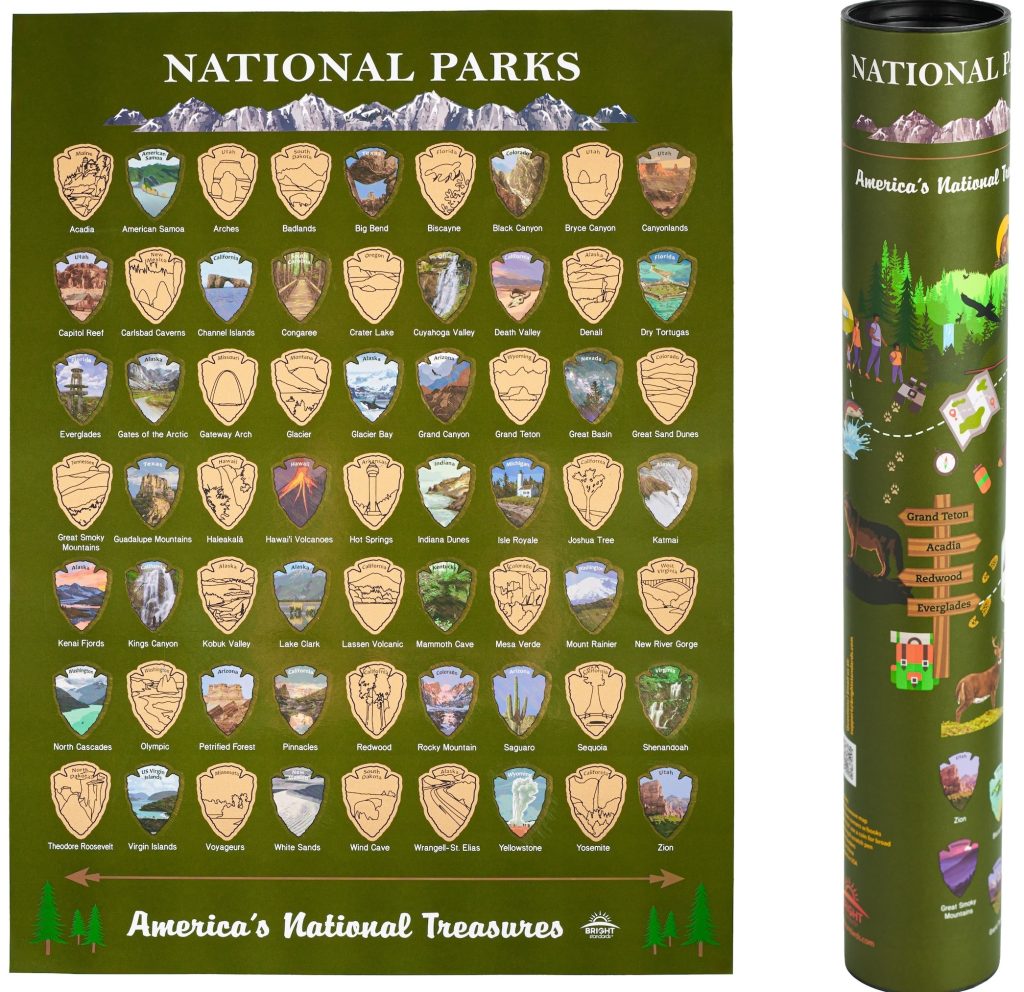
US National Parks List & Map
Want a FREE complete list and recap of all our US National Parks as well as downloadable maps and other great resources? Check out our US National Parks List and Map guide!

<
FAQs
What national parks are on the East Coast?
The East Coast and Eastern United States have a surprisingly rich collection of national parks. The most popular include Acadia (Maine), Shenandoah (Virginia), Great Smoky Mountains (Tennessee/North Carolina), New River Gorge (West Virginia), Mammoth Cave (Kentucky), Congaree (South Carolina), Everglades (Florida), Biscayne (Florida), Dry Tortugas (Florida), and Cuyahoga Valley (Ohio). Beyond these, the East also has dozens of national monuments, national seashores, national recreation areas, and historic sites managed by the National Park Service.
Which East Coast national park is most worth visiting?
Acadia National Park in Maine is widely considered the best East Coast national park for overall scenery and experience — the combination of granite coastline, mountain summits, carriage roads, and the charming town of Bar Harbor makes it uniquely memorable. Great Smoky Mountains is the most visited park in the country for good reason: free admission, stunning mountain scenery, abundant wildlife, and accessibility from a large portion of the Eastern population. For something truly off the beaten path, Congaree and Dry Tortugas both offer experiences you genuinely can’t find anywhere else.
Is there a national park near New York City or Washington D.C.?
Yes — Shenandoah National Park is about 75 miles from Washington D.C. and easily reachable as a day trip or weekend destination. Acadia is roughly 8 hours from New York City but worth the drive for a longer trip. The greater New York and D.C. areas also have numerous National Park Service sites including Gateway National Recreation Area (New York Harbor), Assateague Island National Seashore (Maryland/Virginia), and Catoctin Mountain Park (Maryland) — all managed by the NPS and covered by the America the Beautiful Pass.
What is the best time of year to visit East Coast national parks?
It depends on the park. Acadia and Shenandoah are stunning in fall (October) for foliage, and in late spring (May-June) for wildflowers and smaller crowds. Great Smoky Mountains is busiest in October during peak fall color — visit on weekdays if possible. The Everglades is best December through April during the dry season; summer is hot, humid, and heavily mosquito-affected. Dry Tortugas is pleasant October through April. Mammoth Cave maintains a constant 54°F underground year-round, making it uniquely season-independent.
Do I need reservations for East Coast national parks?
Several East Coast parks have added timed entry permits or reservation requirements for peak periods. Acadia’s Cadillac Mountain Summit Road requires a timed entry permit May through October (available at recreation.gov). Shenandoah’s Old Rag Mountain requires a day-use permit on weekends and holidays March through November. Dry Tortugas ferry tickets and camping permits book up months in advance. Mammoth Cave tours require advance reservations through recreation.gov and fill quickly in summer. Always check the specific park’s NPS page before your visit to confirm current reservation requirements.
