
Most people assume national parks cost money to enter — and many do. But 23 of the 63 national parks have no entrance fee at all, and you can visit them any time without paying a cent. Some of the most spectacular and most visited parks in the country fall into this category. Others are hidden gems that most people have never heard of. This guide covers every free national park worth knowing about, plus the 2026 fee-free days when even the parks that normally charge are open to US residents at no cost.
Worth noting upfront: “free to enter” means no vehicle or per-person entrance fee. Some free parks charge separately for specific activities — cave tours, boat trips, tram rides, or camping fees. We’ll flag those where relevant. And if you visit multiple parks per year, the America the Beautiful annual pass ($80) covers entrance fees at all 63 national parks — making every park effectively free after two or three visits. Use our US National Parks Map to see all 63 parks and plan your visits.
Free National Parks: The Complete List
1. Great Smoky Mountains National Park (Tennessee & North Carolina)
Great Smoky Mountains is the most visited national park in America — and the only major national park that has never charged an entrance fee, thanks to a deed restriction from when Tennessee and North Carolina donated the land in the 1930s. Free admission combined with spectacular mountain scenery, abundant wildlife (over 1,500 black bears), and easy accessibility from the East Coast make it the most democratic park in the system. Every family in America can visit without worrying about an entrance fee.
Don’t miss: Cades Cove wildlife loop, Clingmans Dome (highest point in the park), Laurel Falls Trail, and the synchronous firefly display each June — a lottery-based event that draws visitors from across the country.

2. Congaree National Park (South Carolina)
Congaree protects the largest intact expanse of old-growth bottomland hardwood forest in the United States — a floodplain wilderness of champion-sized trees, blackwater sloughs, and extraordinary biodiversity just 20 miles from Columbia, SC. It’s one of the most undervisited national parks in the country, which means you can walk its boardwalks and trails with almost no company even on summer weekends. Free admission makes it even easier to justify stopping in.
Don’t miss: The Boardwalk Loop (2.4 miles), kayaking Cedar Creek, and the synchronous firefly display in late May/early June — similar to the Smokies but with no lottery required.
3. Cuyahoga Valley National Park (Ohio)
Sandwiched between Cleveland and Akron, Cuyahoga Valley is proof that extraordinary national parks exist in unlikely places. The park follows the Cuyahoga River through a deep forested valley, with waterfalls, wetlands, historic Ohio & Erie Canal infrastructure, and 125 miles of trails. It’s one of the most visited national parks in the country — largely because of its proximity to 4 million people — and its free admission makes it a genuinely accessible everyday escape for Northeast Ohio residents.
Don’t miss: Brandywine Falls (65-foot waterfall, short boardwalk trail), the Towpath Trail (20 miles along the historic canal), and the Cuyahoga Valley Scenic Railroad for a narrated train ride through the valley.
4. Indiana Dunes National Park (Indiana)
Indiana Dunes sits on the southern shore of Lake Michigan, less than an hour from Chicago — making it one of the most accessible national parks in the country for one of the largest metro populations in America. The park protects 15 miles of Lake Michigan shoreline with sandy beaches, towering dunes, and a surprisingly diverse ecosystem where northern boreal species and southern plants coexist at the same latitude. Free admission makes it a practical day trip from Chicago any time of year.
Don’t miss: Mount Baldy (the park’s largest active dune), the beach swimming in summer, and the West Beach area for the best combination of dunes and Lake Michigan views. The park also has surprisingly good birding — over 350 species have been recorded here.

5. New River Gorge National Park (West Virginia)
Designated as America’s newest national park in 2020, New River Gorge protects one of the oldest rivers on the planet through a dramatic 70,000-acre gorge in southern West Virginia. The park offers some of the best whitewater rafting in the eastern United States, world-class rock climbing on sandstone walls, and the iconic New River Gorge Bridge — the longest single-arch steel bridge in the Western Hemisphere. Free admission makes this adventure park a standout value.
Don’t miss: The Long Point Trail overlook of the bridge, the Grandview Rim for easy canyon views, and Bridge Day each October when BASE jumpers leap from the bridge in one of the largest extreme sports events in the country.
6. Hot Springs National Park (Arkansas)
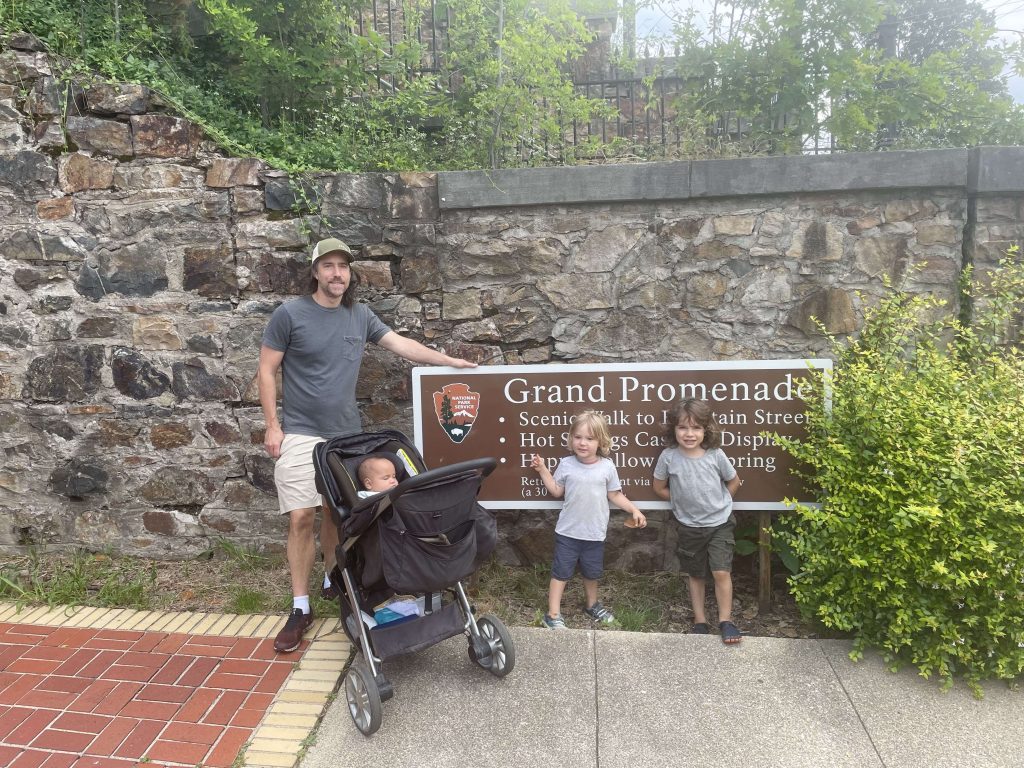
Hot Springs is one of the most unusual national parks in the system — an urban park centered on the historic bathhouse district of Hot Springs, Arkansas, where 47 natural thermal springs flow from the western slope of Hot Springs Mountain. The park has no entrance fee, and the historic Bathhouse Row (a stretch of eight stunning early 20th-century bathhouses) is free to walk and explore. The Buckstaff Bathhouse still operates as a traditional bathhouse for a fee, but the park itself — including the springs, the trails, and the historic district — is free to visit.
Don’t miss: The Grand Promenade along the base of the mountain, the Fordyce Bathhouse (now the park visitor center, free to tour), and the Hot Springs Mountain Tower for panoramic views of the Ouachita Mountains.
7. Biscayne National Park (Florida)
Biscayne is one of the most unusual free national parks in the country: 95% of it is water. The park protects the northern Florida Keys, Biscayne Bay, and the third-largest coral reef in the world — all just 25 miles south of Miami. The mainland visitor center and the surrounding bay shoreline are free to access. Boat tours, snorkeling trips, and camping on the park’s islands cost extra, but the park itself has no entrance fee — making it a free gateway to one of the most biodiverse marine environments in North America.
Don’t miss: The Dante Fascell Visitor Center for exhibits on the reef ecosystem, kayak rentals for exploring the bay, and boat tours to Elliott Key and the offshore reef system.
8. Voyageurs National Park (Minnesota)
Voyageurs is a water-based wilderness park in northern Minnesota along the Canadian border, protecting over 40 lakes and 900 islands in a landscape that’s best explored by boat or canoe. There’s no entrance fee to access the park, though most of the park’s interior is only reachable by water. In winter, the park’s frozen lakes become a network of snowmobile and ski trails. It’s one of the most remote and least visited national parks in the lower 48 — and one of the most rewarding for those who make the trip.
Don’t miss: The Kabetogama Lake Visitor Center for boat tours and access to the interior, stargazing on the open water (Voyageurs is an International Dark Sky Park), and the Ellsworth Rock Gardens — a quirky lakeside garden only accessible by boat.
9. Redwood National Park (California)
Redwood National Park protects the world’s tallest trees — coast redwoods that can reach over 380 feet — along a 40-mile stretch of the Northern California coast. The national park itself has no entrance fee. Note that Redwood is managed jointly with three California State Parks (Prairie Creek, Del Norte Coast, and Jedediah Smith Redwoods), and those state park sections do charge a day-use fee. The national park sections — including the Newton B. Drury Scenic Parkway and the Tall Trees Grove — are free. Check the NPS website to confirm which areas fall under the national park vs. state park jurisdiction before your visit.
Don’t miss: The Lady Bird Johnson Grove (flat, paved loop, completely free), Fern Canyon in Prairie Creek (state park fee applies), and the drive along the Newton B. Drury Scenic Parkway through old-growth redwood forest.

Free National Parks in Alaska
Several of Alaska’s national parks have no entrance fee, including some of the wildest and most remote protected lands in the world. Gates of the Arctic, Kobuk Valley, Lake Clark, and Wrangell-St. Elias (the largest national park in the US at 13.2 million acres) are all free to enter — though reaching them requires significant planning, expense, and often a small charter flight. Glacier Bay National Park, accessible by cruise ship or ferry from Juneau, also has no entrance fee. If Alaska is on your radar, these parks offer extraordinary wilderness without the barrier of an entrance fee — though the logistics and cost of getting there are their own challenge.
2026 Fee-Free Days: When All Parks Are Free
Even the national parks that normally charge an entrance fee waive it on designated fee-free days. In 2026, the National Park Service has announced eight fee-free days — open to US residents only (non-US residents pay normal entrance fees on these dates). Mark your calendar:
- February 16 — Presidents Day (Washington’s Birthday)
- May 25 — Memorial Day
- June 14 — Flag Day/ Trump’s Birthday
- July 3–5 — Independence Day weekend
- August 25 — National Park Service Birthday (110th anniversary)
- September 17 — Constitution Day
- October 27 — Theodore Roosevelt’s Birthday
- November 11 — Veterans Day
Entrance fees are waived on these dates, but camping fees, timed entry reservations, boat tours, and parking fees still apply. These dates are also among the busiest days at popular parks — if you visit Yellowstone or the Grand Canyon on a fee-free holiday weekend, expect significant crowds. The fee-free days work best for parks that are normally hard to justify visiting just for a short trip.
The America the Beautiful Pass: Making Every Park Free
If you visit more than one or two fee-charging parks per year, the America the Beautiful annual pass ($80) makes every national park entrance effectively free. The pass covers one vehicle’s entrance fee at all 63 national parks and hundreds of other federal recreation areas for a full year. A single family visit to two parks — say, Yellowstone ($35) and Grand Canyon ($35) — would cost $70 without the pass. Three visits and it’s already paid for itself. The pass is available at any park entrance, online through the USGS store, or at many outdoor retailers. It does not cover camping fees, cave tours, or other activity fees.
Final Thoughts
Between the always-free parks, the 2026 fee-free days, and the America the Beautiful pass, there’s a free or low-cost option for almost any national park visit. The 23 free parks alone represent an enormous range of landscapes and experiences — from the most visited park in the country to remote wilderness that sees almost no visitors. Start with our US National Parks Map to find the free parks nearest to you and start planning.
undefined
FAQs
Which national parks are free to visit?
23 of the 63 national parks have no entrance fee. The most notable always-free parks include Great Smoky Mountains (the most visited national park in the US), Congaree, Cuyahoga Valley, Indiana Dunes, New River Gorge, Hot Springs, Biscayne, Voyageurs, Redwood, and several Alaskan parks including Glacier Bay, Gates of the Arctic, and Wrangell-St. Elias. Additionally, all national parks waive entrance fees on designated fee-free days throughout the year.
Why is Great Smoky Mountains free?
Great Smoky Mountains has never charged an entrance fee because of a deed restriction written into the original land donation agreements when Tennessee and North Carolina transferred the land to the federal government in the 1930s. The states stipulated that the park must remain free to enter. Despite occasional proposals to add a fee, this restriction has kept the park free for nearly a century — making it uniquely accessible among the country’s most spectacular parks.
When are national parks free in 2026?
The NPS has designated eight fee-free days in 2026 when entrance fees are waived at all national parks for US residents: May 25 (Memorial Day), June 14 (Flag Day), July 3–5 (Independence Day weekend), August 25 (NPS Birthday), September 17 (Constitution Day), October 27 (Theodore Roosevelt’s Birthday), and November 11 (Veterans Day). Note that camping fees, timed entry permits, and activity fees still apply on these dates.
Is the America the Beautiful Pass worth it?
Yes, for almost anyone visiting two or more fee-charging national parks in a year. At $80, the pass pays for itself after two visits to parks that charge $35-40 per vehicle. It covers entrance fees at all 63 national parks and hundreds of other federal recreation areas for a full year from the date of purchase. It does not cover camping fees, cave tours, timed entry reservation fees, or other activity fees — just the entrance fee.
