
Few things capture the power of nature quite like a waterfall thundering over a cliff face. For serious national park collectors working toward visiting all 63 parks, waterfalls often become the most memorable moments of their journey—whether it’s feeling the mist from Yosemite Falls on your face or standing behind the cascade at Grotto Falls in the Smokies.
If you’re planning waterfall hikes this year, timing matters. Spring snowmelt transforms these parks into roaring showcases of nature’s force, with peak flows typically occurring from late April through June (see our complete spring parks guide for more planning tips). The same waterfalls that trickle (or disappear entirely) by late summer become absolute spectacles during spring runoff.
Not all national parks feature impressive waterfalls, but eight stand out for their exceptional cascades—from the tallest waterfall in North America to parks with over 150 named falls. Our US National Parks List and Map provides a complete overview of all 63 parks if you are planning your next national park adventure.
Quick Guide: Best Waterfall Parks by Season
| Park | Best Months | Signature Waterfall | Height |
|---|---|---|---|
| Yosemite | May-June | Yosemite Falls | 2,425 ft |
| Great Smoky Mountains | March-May | Ramsey Cascades | 100 ft |
| Mount Rainier | June-August | Comet Falls | 320 ft |
| Yellowstone | April-May | Lower Falls | 308 ft |
| Olympic | Nov-May | Marymere Falls | 90 ft |
| Glacier | July-Aug | Birdwoman Falls | 492 ft |
| Haleakalā | Nov-April | Waimoku Falls | 400 ft |
| Shenandoah | March-May | Overall Run Falls | 93 ft |
- 1. YOSEMITE NATIONAL PARK, CALIFORNIA
- 2. GREAT SMOKY MOUNTAINS NATIONAL PARK, TENNESSEE/NORTH CAROLINA
- 3. MOUNT RAINIER NATIONAL PARK, WASHINGTON
- 4. YELLOWSTONE NATIONAL PARK, WYOMING/MONTANA/IDAHO
- 5. OLYMPIC NATIONAL PARK, WASHINGTON
- 6. GLACIER NATIONAL PARK, MONTANA
- 7. HALEAKALĀ NATIONAL PARK, HAWAII
- 8. SHENANDOAH NATIONAL PARK, VIRGINIA
- PLANNING YOUR WATERFALL TRIPS
- FINAL THOUGHTS
- US National Parks List & Map
- FAQs
1. YOSEMITE NATIONAL PARK, CALIFORNIA
Why Yosemite Tops Every Waterfall List
Yosemite isn’t just home to spectacular waterfalls—it’s home to the tallest waterfall in North America. Yosemite Falls plunges 2,425 feet in three tiers, with the upper drop alone falling 1,430 feet. When you’re standing in Yosemite Valley looking up at this cascade, the scale feels almost impossible.
Beyond Yosemite Falls, the park features Bridalveil Fall (620 feet), Nevada Fall (594 feet), and Vernal Fall (317 feet). The Merced River feeds most of these waterfalls, creating a concentration of major cascades within a relatively compact area that’s accessible to most visitors.
Best Time to Visit
Peak flow occurs in May and early June when Sierra snowmelt is at its highest. By late summer (August-September), many of Yosemite’s waterfalls reduce to trickles or dry up completely. If you want the full experience, plan your visit between late April and mid-July.
Waterfall Hikes to Plan
- Lower Yosemite Falls Trail – 1 mile round trip, paved and accessible, leads to the base of the falls
- Bridalveil Fall Trail – 0.5 miles round trip, short walk with wheelchair-accessible sections
- Mist Trail to Vernal Fall – 5.4 miles round trip, steep granite stairs, expect to get soaked from the spray
- Upper Yosemite Falls Trail – 7.2 miles round trip, 2,700 feet elevation gain, strenuous but rewarding
The Mist Trail lives up to its name—especially in spring when you’ll be walking through actual rainbows created by the waterfall spray. Bring a rain jacket or embrace getting drenched.
Learn more in our complete Yosemite National Park guide for Camping & Hiking.

2. GREAT SMOKY MOUNTAINS NATIONAL PARK, TENNESSEE/NORTH CAROLINA
The Park with the Most Waterfalls
Great Smoky Mountains National Park holds the title for sheer waterfall quantity—over 100 named waterfalls and cascades within park boundaries. The park’s high rainfall (up to 85 inches annually in some areas) combined with steep mountain terrain creates ideal conditions for waterfalls everywhere you look.
What makes the Smokies special is the variety. You’ll find everything from gentle cascades perfect for families to powerful torrents requiring serious hiking. The park also features one of the only waterfalls in the National Park System where you can walk behind the cascade—Grotto Falls.
Best Time to Visit
The Smokies’ waterfalls flow year-round thanks to consistent rainfall, but spring (March-May) brings the highest water volume. April is particularly spectacular when waterfalls are roaring and wildflowers are blooming. Unlike Western parks dependent on snowmelt, these waterfalls remain impressive even in summer.
Waterfall Hikes to Plan
- Laurel Falls Trail – 2.6 miles round trip, paved trail to an 80-foot cascade, one of the park’s most popular
- Grotto Falls Trail – 2.6 miles round trip via Trillium Gap Trail, walk behind the 25-foot waterfall
- Abrams Falls Trail – 5 miles round trip, the 20-foot fall has the highest water volume in the park
- Rainbow Falls Trail – 5.4 miles round trip, 80-foot fall creates rainbows in the afternoon sunlight
- Ramsey Cascades Trail – 8 miles round trip, strenuous hike to the park’s tallest waterfall at 100 feet
The Deep Creek area near Bryson City, North Carolina offers three waterfalls (Juney Whank, Tom Branch, and Indian Creek Falls) accessible via a moderate 4-mile loop—perfect if you want to check multiple waterfalls off your list in one hike.
Free Entry Bonus
Great Smoky Mountains is one of the few national parks with no entrance fee, making it budget-friendly for families working toward visiting all 63 parks.

3. MOUNT RAINIER NATIONAL PARK, WASHINGTON
150+ Waterfalls Fed by 25 Active Glaciers
Mount Rainier National Park contains more than 150 named waterfalls—more than almost any other park in the system. What makes these waterfalls unique is their source: 25 active glaciers covering the 14,411-foot volcanic peak. The glacial meltwater creates waterfalls with a distinctive milky-blue color from suspended rock flour.
The park’s dramatic elevation changes (from 1,600 feet to over 14,000 feet) create perfect conditions for waterfalls. Many of the cascades are visible right from park roads, while others require hiking through old-growth forest to reach them.
Best Time to Visit
Peak waterfall flow occurs from late June through August when glacier melt is at its highest. Snow typically blocks many park roads until late June or early July, so plan accordingly. The Paradise area (the park’s most popular destination) offers the best waterfall access once roads open.
Waterfall Hikes to Plan
- Christine Falls – Roadside viewing from the bridge on the way to Paradise, no hiking required
- Narada Falls – 0.2 miles round trip from the parking area to viewpoint, 168-foot cascade
- Myrtle Falls – 0.5 miles one way via the Skyline Trail, 72-foot fall with Mount Rainier as backdrop
- Comet Falls – 3.8 miles round trip, 320 feet tall (the park’s highest accessible waterfall)
- Silver Falls – 3 miles round trip via Grove of the Patriarchs Trail, powerful cascade near ancient trees
Myrtle Falls provides one of the most photographed views in the entire National Park System—the waterfall in the foreground with Mount Rainier’s massive peak behind it. If you only have time for one waterfall hike, make it this one.
Accessibility Note
Many of Mount Rainier’s trails are stroller-friendly or wheelchair-accessible, including the paths to Christine Falls and parts of the Skyline Trail, making it one of the more accessible parks for waterfall viewing.
4. YELLOWSTONE NATIONAL PARK, WYOMING/MONTANA/IDAHO
45 Named Waterfalls Plus Geothermal Wonders
Most people visit Yellowstone for Old Faithful and the geothermal features, but the park contains 45 named waterfalls and hundreds of unnamed cascades. The most famous is Lower Falls of the Yellowstone River, plunging 308 feet into the Grand Canyon of the Yellowstone—a sight that rivals any waterfall in the National Park System.
What sets Yellowstone apart is the combination: you can watch a geyser erupt in the morning and hike to a massive waterfall in the afternoon. The Yellowstone River alone drops 1,200 feet over 20 miles through the canyon, creating multiple spectacular falls along the way.
Best Time to Visit
April through May offers peak waterfall flows from snowmelt, with the added bonus of fewer crowds than summer. Many waterfalls remain impressive through September, though flows decrease as summer progresses. Some waterfalls are accessible year-round, offering winter ice-fall viewing opportunities.
Waterfall Hikes to Plan
- Upper Falls – Roadside viewing from Uncle Tom’s parking area, 109-foot drop
- Lower Falls – Multiple viewpoints including Artist Point (0.5 miles) and Uncle Tom’s Trail (328 stairs down to base, strenuous)
- Mystic Falls – 2.4 miles round trip via Biscuit Basin, 70-foot waterfall through geothermal landscape
- Tower Fall – Short walk from parking area to overlook, 132-foot fall (trail to base is closed indefinitely)
- Union Falls – 14 miles round trip, 250-foot cascade (for serious hikers only)
- Gibbon Falls – Roadside viewing, 84-foot fall accessible without hiking
Hidden Gem
Silver Cord Cascade at 1,200 feet is actually the park’s tallest waterfall, but it’s only visible from a distant viewpoint on the North Rim Drive. Most visitors never see it despite its impressive height.
Roadside Waterfall Advantage
Unlike many parks where you need to hike miles for waterfall views, Yellowstone offers over a dozen waterfalls visible from your car. This makes it perfect for visitors with mobility limitations or families with young children.

5. OLYMPIC NATIONAL PARK, WASHINGTON
Rainforest Waterfalls and Coastal Cascades
Olympic National Park’s incredible diversity—temperate rainforest, rugged Pacific coastline, and alpine mountains—creates waterfalls unlike anywhere else in the National Park System. The park receives up to 170 inches of rain annually in the Hoh Rainforest, feeding waterfalls that flow year-round through moss-draped old-growth forests.
What makes Olympic special is the variety of waterfall settings. You can hike to Sol Duc Falls through dense rainforest in the morning, then drive to Third Beach to see a waterfall that literally cascades directly into the Pacific Ocean. This park offers waterfall experiences you won’t find anywhere else.
Best Time to Visit
Olympic’s waterfalls are impressive year-round, but winter and spring (November through May) bring the highest flows thanks to the park’s legendary rainfall. Summer offers better weather for hiking, though waterfalls will have lower volume. Be prepared for rain any time of year—this is a temperate rainforest, after all.
Waterfall Hikes to Plan
- Sol Duc Falls – 1.6 miles round trip through old-growth forest, 48-foot cascade with high volume
- Marymere Falls – 1.8 miles round trip via Lake Crescent, 90-foot waterfall in lush forest setting
- Madison Falls – 0.2 miles round trip, wheelchair-accessible boardwalk, easiest waterfall in the park
- Merriman Falls – Roadside viewing along Highway 101, no hiking required
- Third Beach Falls – 2.8 miles round trip to the beach, unique waterfall flowing into the ocean
Unique Feature
The Third Beach waterfall is one of the few places in the continental United States where you can see a waterfall pour directly into the ocean. The hike takes you through coastal forest before emerging onto a dramatic Pacific beach.
Rainforest Experience
Sol Duc Falls might only be 48 feet tall, but its setting deep in the temperate rainforest with moss-covered trees and the deafening roar of water makes it one of the most atmospheric waterfall hikes in any national park. The short trail is suitable for most fitness levels.
6. GLACIER NATIONAL PARK, MONTANA
Glacier-Fed Waterfalls with Distinctive Blue Color
Glacier National Park’s waterfalls get their distinctive milky-blue color from glacial flour—fine rock particles ground by the park’s 25 named glaciers. This creates waterfalls that look different from anywhere else in the National Park System, with an otherworldly blue-white appearance that’s especially striking in photographs.
The park contains dozens of waterfalls, many visible from the famous Going-to-the-Sun Road. Birdwoman Falls at 492 feet is one of the most photographed, cascading down the mountain face in plain view from the road. The combination of glacial water, dramatic mountain settings, and relatively easy access makes Glacier exceptional for waterfall enthusiasts.
Best Time to Visit
Late June through early September offers the best waterfall viewing once Going-to-the-Sun Road fully opens (typically early July). Peak glacier melt occurs in July and August, creating maximum waterfall volume. The road usually closes in October and doesn’t fully reopen until late June or early July due to snow.
Waterfall Hikes to Plan
- Birdwoman Falls – Roadside viewing from Going-to-the-Sun Road, 492-foot cascade visible from your car
- Weeping Wall – Drive beneath this seasonal waterfall on Going-to-the-Sun Road (it literally drips on your car)
- St. Mary Falls – 1.6 miles round trip, 35-foot cascade in a narrow gorge
- Virginia Falls – Continue 1.2 miles beyond St. Mary Falls for a second waterfall
- Running Eagle Falls (Trick Falls) – 0.6 miles round trip, unique two-tier waterfall (upper tier only flows in spring)
Going-to-the-Sun Road
This 50-mile scenic drive offers more waterfall viewing per mile than almost any road in the National Park System. Budget several hours for the drive because you’ll want to stop at multiple pullouts to photograph the glacier-fed cascades.
Cold Water Warning
These waterfalls flow with frigid glacial meltwater—typically 40-50°F even in summer. Don’t plan on swimming or wading. The cold is shocking enough just standing in the spray.
7. HALEAKALĀ NATIONAL PARK, HAWAII
Tropical Waterfalls Through Bamboo Forests
Haleakalā National Park offers a completely different waterfall experience—tropical cascades on a remote Hawaiian island. The Kīpahulu District on Maui’s east coast features Waimoku Falls, a stunning 400-foot waterfall accessible only after hiking through one of the most magical bamboo forests you’ll ever experience.
This isn’t the alpine or temperate rainforest setting of mainland parks. Here, waterfalls flow through lush tropical vegetation with native Hawaiian plants, past smaller cascades and pools, creating an experience unlike any other national park. The Pools of ‘Ohe’o (often called Seven Sacred Pools) add to the unique landscape. Visiting Hawaii’s parks? Combine this with Hawaii Volcanoes National Park on the Big Island and American Samoa.
Best Time to Visit
Waterfalls flow year-round in Haleakalā’s Kīpahulu District, but winter and spring (November through April) bring the highest flows. Flash flooding is possible during heavy rains—check conditions at the visitor center before hiking. Summer offers more stable weather but lower water volume.
Waterfall Hikes to Plan
- Pipiwai Trail to Waimoku Falls – 4 miles round trip, passes through bamboo forest, 400-foot waterfall at trail’s end
- Makahiku Falls – 0.5 miles one way on Pipiwai Trail, 200-foot cascade visible from overlook (first waterfall you’ll encounter)
- Pools of ‘Ohe’o – Short walks from parking area to view pools and smaller cascades (swimming conditions vary)
Bamboo Forest Experience
The walk through the dense bamboo forest on the way to Waimoku Falls feels like stepping into another world. The bamboo stalks grow so tall and thick that they create a natural cathedral, with sunlight filtering through gaps overhead. The sound of bamboo clicking together in the breeze adds to the otherworldly atmosphere.
Important Notes
The road to Kīpahulu is separate from the summit area of Haleakalā—you can’t drive between them within the park. Plan at least 3-4 hours round trip for the Waimoku Falls hike. Flash floods can occur suddenly; never enter streams or pools if water levels are rising.
8. SHENANDOAH NATIONAL PARK, VIRGINIA
East Coast Waterfall Access
Shenandoah National Park provides the best waterfall experience east of the Mississippi for serious park collectors. While the waterfalls aren’t as tall as Western parks, Shenandoah offers excellent accessibility via Skyline Drive and trails suitable for all skill levels. Overall Run Falls at 93 feet holds the title as the park’s tallest cascade.
For East Coast visitors working toward all 63 parks, Shenandoah delivers a genuine waterfall experience without requiring a cross-country flight. The Blue Ridge Mountains create ideal conditions for numerous cascades throughout the park’s 105-mile length.
Best Time to Visit
Spring (March through May) brings peak waterfall flows from snowmelt and spring rains. Many of Shenandoah’s waterfalls reduce to trickles by late summer. Fall (September-October) offers spectacular foliage as a bonus, though water levels will be lower than spring.
Waterfall Hikes to Plan
- Dark Hollow Falls – 1.4 miles round trip, 70-foot cascade, shortest route to a major waterfall in the park
- Overall Run Falls – 6.4 miles round trip, 93-foot fall (tallest in park), views of Shenandoah Valley
- Whiteoak Canyon Falls – 4.6 miles round trip to the first falls, six waterfalls total if you continue
- Rose River Falls – 4 miles round trip via Dark Hollow Falls Trail, two-tiered 67-foot cascade
- South River Falls – 4.4 miles round trip, 83-foot fall (third tallest in park)
Skyline Drive Advantage
Unlike remote Western parks, Shenandoah’s waterfalls are all accessible via relatively short hikes from Skyline Drive. This makes waterfall-hopping realistic in a single day—you can easily visit 2-3 major waterfalls if you start early.
Proximity Bonus
Shenandoah sits just 75 miles from Washington D.C., making it the most accessible major waterfall park for the East Coast population. Perfect for a long weekend if you’re working through your national parks list systematically.

PLANNING YOUR WATERFALL TRIPS
When to Visit for Peak Flows
Timing matters significantly for waterfall viewing. Here’s when each park reaches peak waterfall volume:
Snowmelt-Dependent (Western Parks):
- Yosemite: Late April through June
- Mount Rainier: Late June through August
- Glacier: July through early September
- Yellowstone: April through May
Rainfall-Dependent (Other Parks):
- Great Smoky Mountains: March through May (but impressive year-round)
- Olympic: November through May
- Haleakalā: November through April
- Shenandoah: March through May
By late summer, many Western waterfalls reduce dramatically or dry up completely. If you’re planning a multi-park road trip, prioritize snowmelt-dependent parks in late spring when flows are highest.
What to Pack for Waterfall Hikes
- Rain jacket or waterproof layer – You’ll get soaked from waterfall spray, especially on trails like Yosemite’s Mist Trail
- Traction footwear – Rocks near waterfalls are slippery; good hiking boots with grip are essential
- Waterproof phone case or dry bag – Protect electronics from spray and potential rain
- Extra layer – Waterfall mist creates surprisingly cold microclimates even on warm days
- Trekking poles – Helpful on steep trails with wet conditions
Safety Considerations
Never climb on rocks near waterfalls or enter the water above a waterfall. Every year, visitors are swept over falls after underestimating current strength. Stay on designated trails and behind safety barriers. Flash floods can occur suddenly in narrow canyons—check weather forecasts and ranger warnings before hiking.
Making the Most of Your Visit
Start waterfall hikes early in the day to avoid crowds at popular trails like Yosemite’s Mist Trail or Great Smoky Mountains’ Laurel Falls. Weekdays offer significantly fewer people than weekends, especially at parks near major population centers like Shenandoah.
If you’re working toward visiting all 63 parks, consider combining waterfall-focused parks with nearby parks on the same trip. For example, Mount Rainier pairs well with Olympic (both in Washington), while Glacier can be combined with Yellowstone on a Montana/Wyoming road trip.
FINAL THOUGHTS
Waterfalls represent some of the most powerful and memorable moments in the National Park System. Whether you’re standing at the base of Yosemite Falls feeling the thunderous spray or walking through Olympic’s rainforest to Sol Duc Falls, these experiences stay with you long after you leave the park.
For those working toward visiting all 63 national parks, these eight parks should be prioritized during peak waterfall season. The difference between visiting Yosemite in May versus September is dramatic—you might see a trickle instead of the full spectacle if you time it wrong.
Spring is calling. The snowmelt is beginning. The waterfalls are roaring. Which park will you visit first?
Want more national park planning resources? Check out our complete US National Parks List and Map to track your progress toward all 63 parks.
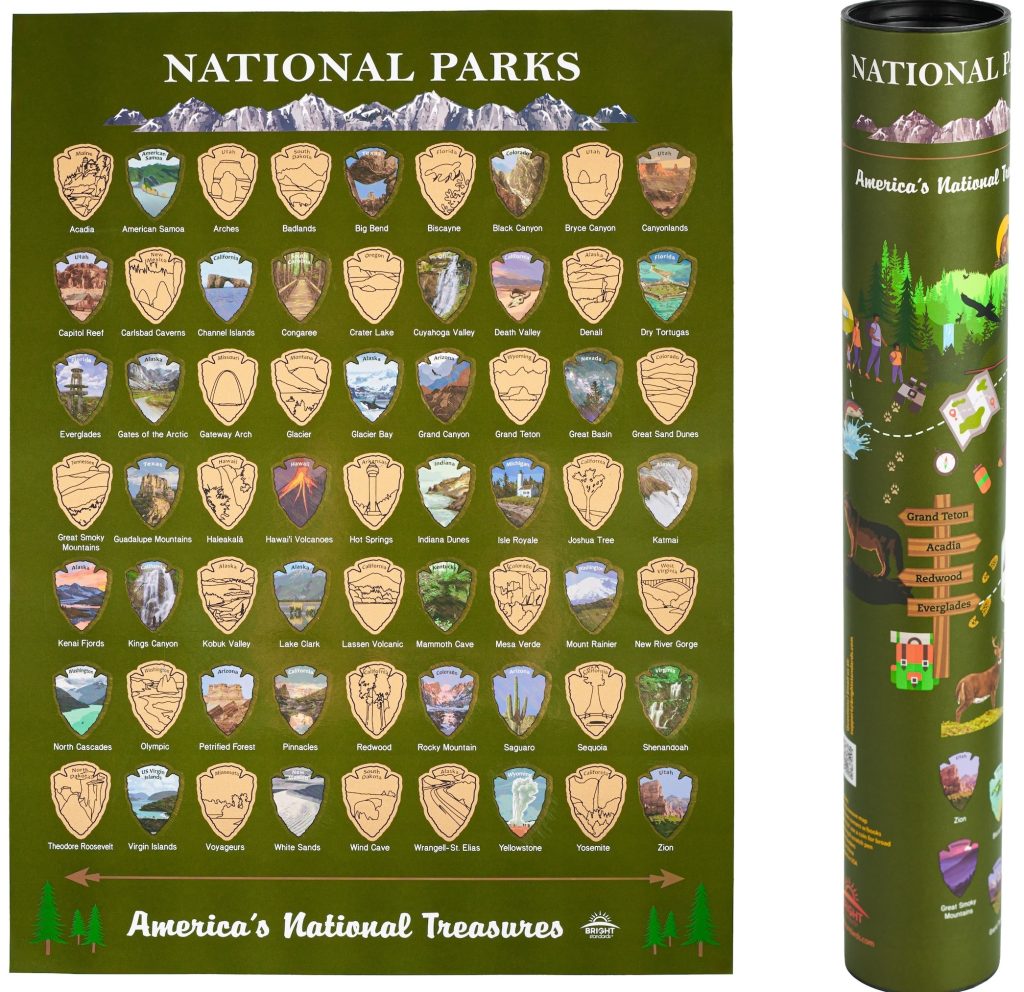
US National Parks List & Map
Want a FREE complete list and recap of all our US National Parks as well as downloadable maps and other great resources? Check out our US National Parks List and Map guide!

FAQs
Which national park has the most waterfalls?
Great Smoky Mountains National Park has over 100 named waterfalls and cascades—more than any other park in the system. The park’s high rainfall (up to 85 inches annually) and steep mountain terrain create ideal conditions for waterfalls throughout the 522,427-acre park.
What is the tallest waterfall in a US national park?
Yosemite Falls in Yosemite National Park is the tallest waterfall in North America at 2,425 feet. The upper drop alone measures 1,430 feet. Peak flow occurs in May when Sierra snowmelt is at its highest.
When is the best time to see waterfalls in national parks?
For Western parks (Yosemite, Mount Rainier, Glacier, Yellowstone), visit during snowmelt season from late April through early July. For rainfall-dependent parks like Great Smoky Mountains and Olympic, spring (March-May) typically offers the highest flows, though these parks maintain impressive waterfalls year-round.
Can you swim in national park waterfalls?
Swimming policies vary by park and location. Never swim near the top of any waterfall or enter swift-moving water above a cascade. Many parks have designated swimming areas away from waterfalls. Always check with rangers about current conditions and safety before entering any water.
Which national park is best for easy waterfall hikes?
Great Smoky Mountains and Yellowstone offer the most roadside or short-walk waterfall viewing. Yellowstone has over a dozen waterfalls visible from your car or with walks under 0.5 miles. Great Smoky Mountains’ Laurel Falls is paved and only 2.6 miles round trip.
Do waterfalls dry up in summer?
Many Western park waterfalls significantly reduce or dry up completely by late summer. Yosemite’s waterfalls often become trickles by August-September. Parks like Great Smoky Mountains and Olympic maintain year-round flows due to consistent rainfall rather than snowmelt dependence.
How do I avoid crowds at popular waterfall trails?
Start hikes before 8 AM, visit on weekdays rather than weekends, and consider less-famous waterfalls within the same park. For example, in Yosemite, hike to Wapama Falls in Hetch Hetchy rather than the crowded Mist Trail to Vernal Fall.
Are waterfall trails suitable for kids?
Many waterfall trails are family-friendly. Great Smoky Mountains’ Laurel Falls, Mount Rainier’s Myrtle Falls, and Yosemite’s Lower Yosemite Falls all work well for children. Always check trail difficulty ratings and bring appropriate gear—rocks near waterfalls are extremely slippery.
Which waterfall park is best for photography?
Yosemite offers the most iconic waterfall photography with dramatic granite cliffs as backdrops. Mount Rainier’s Myrtle Falls with the mountain in the background is arguably the most photographed waterfall scene in the National Park System. Bring a polarizing filter to reduce glare from waterfall spray.
Can I visit multiple waterfall parks in one trip?
Yes, with smart planning. Mount Rainier and Olympic are both in Washington and can be combined in one trip. Glacier and Yellowstone work well together for a Montana/Wyoming road trip. Yosemite pairs with several California parks if you’re working through all 63 parks systematically.

